Auto Insurance
Coverage, Costs & How it Works

Auto insurance is one of the most important financial protections for drivers. It helps cover the costs of accidents, vehicle damage, medical expenses, and liability claims.

Avg Full Coverage

$167-225/mo
Varies by age & state (2026 avg)

Deductible Range

$500 – $2,000
Most drivers choose $500 or $1,000

Coverage Types

6 Core
Liability through uninsured motorist

Avg Minimum Coverage

$68–72/mo
State-required liability only

Every state in the U.S. requires drivers to carry some form of auto insurance, but coverage requirements and pricing can vary significantly depending on where you live and the type of protection you choose.

Understanding how auto insurance works — including coverage types, cost factors, and policy limits — can help you choose the right protection while avoiding unnecessary expenses.

To better understand potential costs, you can also use our Auto Insurance Cost Calculator to estimate monthly premiums based on common pricing factors.

Overview

What is auto insurance?

Auto insurance is a contract between a driver and an insurance company that provides financial protection against losses resulting from accidents, theft, or damage.

In exchange for paying a premium, the insurer agrees to cover certain costs depending on the coverage included in the policy.

Most auto insurance policies include multiple types of coverage that protect both the driver and other people involved in an accident.

You pay a premium

A fixed monthly or annual amount you pay to keep your policy active — whether or not you make a claim that month or year.

You meet a deductible

The amount you pay out of pocket when you file a claim before your insurer covers the rest. Common auto deductibles range from $250 to $1,500.

Insurance shares costs

After your deductible, your insurer covers the remaining cost of repairs, medical bills, or liability claims — up to your policy's coverage limits.

Coverage

What auto insurance typically covers

Auto insurance policies are built around five core coverage types — here is what each one actually protects.


Liability Coverage

Liability coverage pays for injuries or property damage you cause to others in an accident. It is the minimum coverage required in most states.

Personal Injury Protection (PIP)

PIP coverage helps pay medical expenses for you and your passengers after an accident, regardless of fault.

Uninsured / Underinsured Motorist Coverage

This coverage protects you if you are hit by a driver who has little or no insurance.

Comprehensive Coverage

Comprehensive coverage protects against non-collision events such as theft, vandalism, fire, weather damage, or falling objects.

Collision Coverage

Collision coverage pays for damage to your vehicle if you are involved in an accident, regardless of who is at fault.

Factors That Affect Auto Insurance Rates:

Insurance companies evaluate risk when calculating premiums. Some of the most important factors include:

Because each insurance company uses its own pricing model, quotes can vary even for drivers with similar profiles.

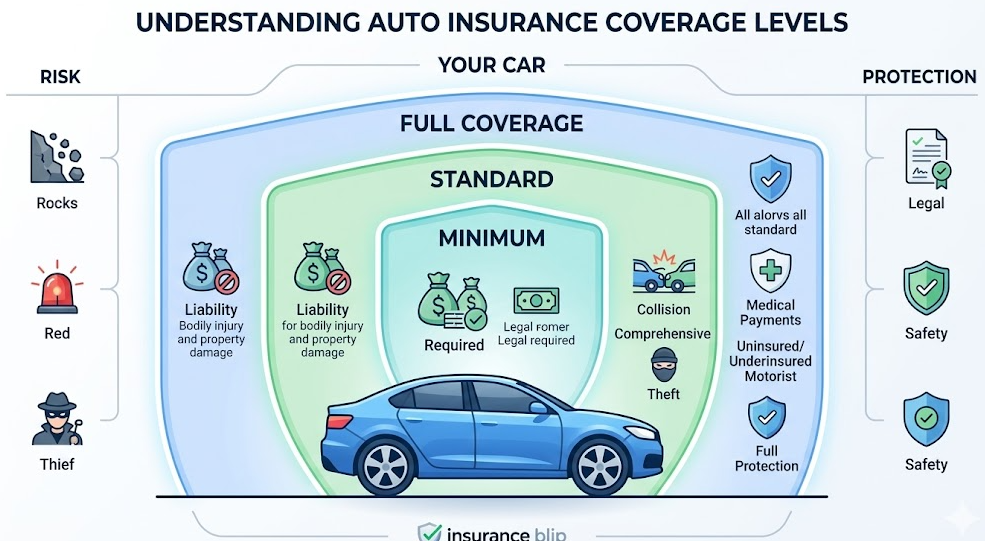
Minimum Coverage vs Full Coverage

Minimum Coverage

Minimum coverage policies only meet the legal requirements set by a state and usually include liability protection. While minimum coverage costs less, it may not fully protect you if your vehicle is damaged or totaled in an accident.

Full Coverage

Full coverage policies typically include liability, collision, and comprehensive protection. Drivers with newer or more valuable vehicles often choose full coverage to reduce financial risk.

When Its Time

When You need auto insurance?

Auto insurance is legally required to register or operate a vehicle on public roads. Beyond the legal minimum, review your coverage whenever:

INTERACTIVE TOOL

See your real auto insurance cost in 60 seconds.

Get a personalized estimate based on your age, ZIP, household, and tier — no signup, no spam.

Auto Insurance Costs

How to lower auto insurance costs

Drivers can often reduce insurance premiums by taking a few practical steps:

Install vehicle safety features
Anti-theft devices, dashcams, and modern driver assistance systems (automatic braking, lane departure warning) can qualify you for safety feature discounts at many insurers.
Bundle policies with the same insurer
Combining auto with home or renters insurance unlocks multi-policy discounts of 5–25% at most major insurers — one of the easiest premium reductions available.
Increase your deductibles
Moving from a $500 to $1,000 deductible reduces your monthly premium by 10–15% on average. Only raise your deductible if you have savings to cover the higher out-of-pocket cost when you file a claim.
Maintain a clean driving record
A single at-fault accident raises your rate by 40% or more and stays on your record for 3–5 years. Avoiding violations is the single most effective long-term strategy for keeping premiums low.
Compare quotes from multiple companies
Insurers reprice risk constantly. Drivers who compare at least 3 quotes every 12 months save an average of $400–$700 per year for identical coverage simply by switching to a more competitive insurer.
Take defensive driving courses
Completing an approved defensive driving course qualifies you for discounts of 5–10% at most major insurers — and can sometimes reduce points on your license after a violation.

Decision Guide

How to choose the right auto insurance coverage

Match your coverage to your actual situation — not just the cheapest option available.

IF YOU'RE...

A new or young driver

RECOMMENDED
State minimum liability to start, then add collision
Young drivers pay the highest premiums — starting with minimum coverage keeps costs manageable while building a clean driving record. Add collision coverage once premiums reduce around age 25.
IF YOU'RE...

Financing or leasing your vehicle

RECOMMENDED
Full coverage (required by lender)
Lenders require collision and comprehensive on financed or leased vehicles to protect their financial interest. You cannot legally drop full coverage until the loan is paid off.ctibles which reduces your monthly premium.
IF YOU'RE...

Driving an older vehicle you own outright

RECOMMENDED
Liability only
If your vehicle current market value is less than 10x your annual collision & comprehensive premium, dropping those components often makes financial sense. You pay for coverage that never result in a payout exceeding your vehicle worth.
IF YOU'RE...

Insuring multiple vehicles or drivers

RECOMMENDED
Full coverage BOP with multi-vehicle discount
Multi-vehicle policies on the same insurer typically unlock 10–25% discounts versus separate policies. Bundling with home or renters insurance adds further savings.

Read Our Recent Articles On Auto Insurance

All
Insurance Basics
Coverage Guides
Comparison Guides
Cost Guides
How much car insurance cost per month
Read More
What Is a Deductible in Auto Insurance
Read More
what is auto insurance
Read More
How Much Coverage Do You Need
Read More
1 2 3

Related Tools

The auto insurance tool ecosystem

Explore our featured tools related to auto insurance.

Auto Insurance Cost Calculator

Get a personalised monthly premium estimate based on your age, driving history, vehicle type, coverage level, and location.

LIVE

Coverage Comparison Tool

Compare minimum coverage vs full coverage to see the real cost difference & what each option actually protects.

Coming Soon

Discount Finder

Answer 5 quick questions about your driving habits and profile to find which auto insurance discounts you currently qualify

Coming Soon

Deductible Impact Calculator

See exactly how changing your deductible from $500 to $1,000 or $1,500 affects your monthly premium — before you decide.

Coming Soon

FAQ's

Common Questions Asked for Auto Insurance

The most common questions readers ask about auto insurance coverage, cost, and claims.


Is auto insurance required in every state?
Most U.S. states require drivers to carry at least minimum liability coverage.
What happens if I drive without insurance?
Driving without insurance can result in fines, license suspension, and financial liability for damages.
How often should I review my insurance policy?
Experts recommend reviewing your policy annually or after major life events such as moving or purchasing a new vehicle.
Can insurance rates change over time?
Yes. Premiums may change due to driving history, vehicle changes, location, or insurer pricing adjustments.
What is the difference between minimum and full coverage?

Minimum coverage (liability only) covers damage and injury you cause to other people — it does not cover your own vehicle. It meets your state’s legal requirement but leaves significant gaps if you are at fault in an accident. Full coverage adds collision (your car after an accident regardless of fault) and comprehensive (theft, weather, fire). Full coverage costs an average of $95/month more than minimum nationally. Whether it is worth it depends on your vehicle’s current value — if your car is worth less than 10x your annual collision and comprehensive premium, dropping to liability only may make sense. Read details here

How much auto insurance coverage do I actually need?

At minimum, your state’s legal requirement. Most financial advisors recommend exceeding state minimums significantly — state minimum liability limits (often $25,000/$50,000) can be exhausted by a single serious accident, leaving you personally liable for the remainder. A common recommendation is 100/300/100 liability coverage (100K per person, 300K per accident, 100K property damage) plus collision and comprehensive if your vehicle has meaningful value. Read Details here

Explore More Insurance Tools

You may also find these tools helpful:

Auto Insurance Cost Calculator

Stop guessing your monthly rates. Input your vehicle type, driving history, desired coverage limits to receive an instant estimate of your auto insurance costs & find ways to save on your policy.

Life Insurance Needs Calculator

Find out exactly how much coverage your family needs to stay protected. This tool analyzes your debts, income, and future goals to provide a personalized insurance target in minutes.

Home Insurance Cost Calculator

Protect your biggest investment without overpaying. Estimate your annual premiums based on your home’s value, location, and safety features to find a policy that fits your budget.

Health Insurance Premium Estimator

Get a clear picture of your potential healthcare costs. Use this estimator to compare plan types & see how different deductibles & coverage levels impact your monthly premium.

Travel Insurance Calculator

Quickly estimate costs for medical emergencies, cancellations, and lost luggage based on your destination and duration. Get the coverage you need to travel with total peace of mind.

Business Insurance Cost Estimator

Secure your company's future with the right coverage. Quickly calculate estimated costs for general liability, property, and worker’s compensation based on your industry and team size.