No, in most cases. Standard homeowners insurance is written to protect a residence and personal belongings, not commercial activity, and nearly every policy contains a business use exclusion that limits or entirely removes coverage once your home is also being used to generate income. This surprises a lot of business owners who assume their existing homeowners policy simply extends to whatever they do at home.
The exclusion exists because insurers price homeowners policies based on residential risk, not commercial risk, and running a business from your home introduces a different risk profile entirely: more visitors, more valuable business equipment on the premises, and liability exposure tied to commercial activity rather than personal living.
What Homeowners Insurance Excludes for Business Use
Most standard homeowners policies exclude three things once business activity is involved. Business property, including inventory, specialized equipment, and business owned electronics, typically is not covered, or is covered only up to a very small limit, often a few thousand dollars at most, regardless of its actual value. Business liability is excluded entirely, meaning if a client or customer is injured while visiting your home for business purposes, your homeowners policy will generally deny that claim outright. Lost business income if your home becomes temporarily unusable is not covered either, since business interruption is a commercial insurance concept that has no equivalent in a standard residential policy.
The practical effect is that a home-based business owner relying solely on homeowners insurance is running with far less protection than they likely assume, particularly around liability, which is often the more expensive risk if something goes wrong.
What Actually Covers a Home-Based Business
Two options typically fill this gap, and which one makes sense depends on how substantial the business actually is. A home-based business endorsement, sometimes called a rider, can be added to an existing homeowners policy for a relatively small additional premium. It usually increases the coverage limit for business property and adds a modest amount of liability protection, which works well for a small, low-risk operation such as a part-time online reseller or a solo consultant who occasionally works from a home office.
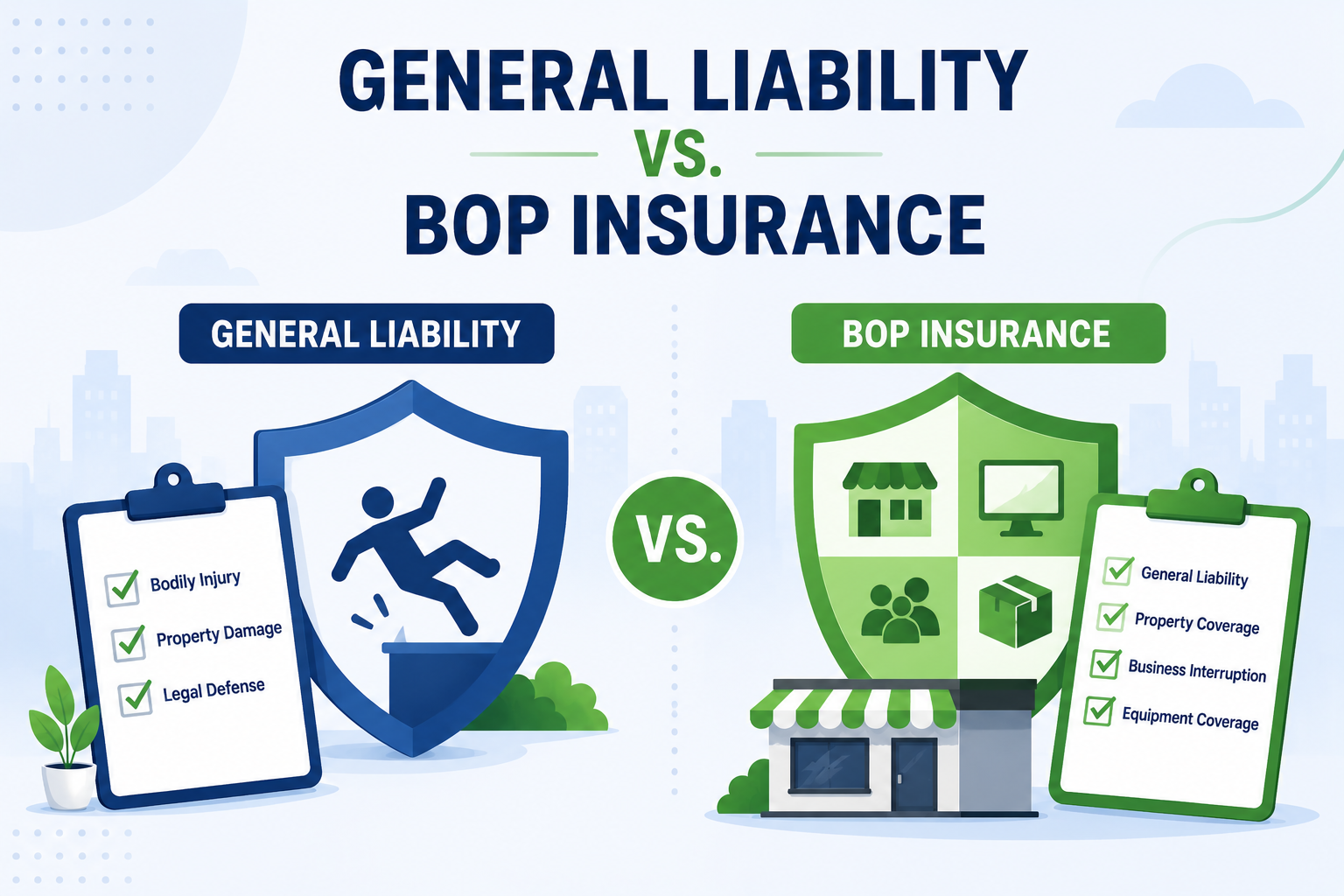
For a business with more significant equipment, regular client visits, or meaningful revenue, a separate Business Owner's Policy is usually the better fit. A BOP provides real commercial liability limits alongside property coverage, rather than the limited add-on protection a homeowners rider provides. For a full breakdown of how a BOP works, see General Liability vs BOP, and for the broader picture of what business insurance covers overall, see what business insurance covers.
Table of Contents
Rachel Morgan
Insurance Coverage Analyst
Rachel Morgan covers insurance coverage analysis at InsuranceBlip. Her work examines the gap between what policies promise and what they actually pay out, helping readers understand their coverage before they ever need to use it.
Businesses with no meaningful equipment or client visits
Small, low-risk home businesses
Businesses with regular clients, equipment, or growing revenue
When You Might Be Covered Anyway
There are a few narrow situations where a standard homeowners policy still applies without any modification. If your work is entirely remote, involves no client visits, no business inventory kept at home, and no specialized business equipment beyond a personal laptop, some insurers consider this incidental use rather than a business operation and will not apply the exclusion. This tends to apply to freelancers doing purely digital work with essentially no physical footprint, rather than anyone selling physical products or meeting clients in person.
Even in these cases, it is worth confirming directly with your insurer rather than assuming you qualify, since the line between incidental personal use and business use is not always obvious from the outside, and insurers apply it inconsistently.
Get An Estimate Of Business Insurance Cost
Estimate general liability and small business insurance costs based on your industry, business size, and coverage needs.
A likely gap. A woodworker builds custom furniture in a home garage workshop and sells finished pieces online. The workshop contains several thousand dollars in tools and lumber inventory, and a client occasionally visits to view a custom order in progress. A standard homeowners policy would almost certainly deny a claim if a tool were stolen or a visiting client were injured in the workshop, since both the inventory and the liability exposure clearly exceed incidental personal use.
A likely gray area. A freelance writer works from a spare bedroom, has no clients visit, and owns no business equipment beyond a laptop already covered as personal property. Many insurers would treat this as incidental use requiring no changes to the policy, though the safest step is still confirming directly rather than assuming.
A clear need for more coverage. A tutor runs weekly sessions with several students visiting the home each week. Even without significant inventory, the regular presence of clients on the property creates a liability exposure most homeowners policies exclude outright, making a rider or a full BOP a meaningful protection rather than an optional extra.
It depends on what the home office involves. A desk and a computer used for remote work with no clients visiting and no significant business equipment usually does not require anything beyond your existing homeowners policy. Once client visits, business inventory, or specialized equipment enter the picture, a rider or a full policy becomes worth considering.
What if I just sell products online from home?
This depends heavily on how much inventory you keep on the property and its value. A small hobby level operation with minimal inventory may fall under incidental use, but any meaningful volume of inventory, particularly anything valuable or flammable, typically exceeds what a standard homeowners policy is willing to cover without a rider or separate policy.
Will my homeowners insurer cancel me for running a business?
Insurers generally will not cancel a policy simply because you disclosed a small home-based business, though failing to disclose one and having it discovered during a claim can create real problems, including a denied claim or a canceled policy. It is almost always better to inform your insurer directly, since the alternative risk is losing coverage entirely at the exact moment you need it.
Confirm the Gap Before You Need It
The most important thing to understand about running a business from home is that your homeowners policy was never designed to cover it, and the exclusion applies whether or not you have thought about it. For a low-risk, fully remote operation, this may genuinely not matter. For anything involving client visits, inventory, or specialized equipment, closing this gap with a rider or a full Business Owner's Policy is worth doing before a claim forces the question.
Use our free tools to estimate insurance costs before you shop. No personal information required just straight forward estimates.
Auto Insurance Calculator
Estimate your car insurance costs based on your age range, driving history, vehicle type, coverage level, & location. Understand how each factor affects your premium.
Life Insurance Needs Calculator
Calculate how much life insurance coverage your family might need based on your income, debts, and financial goals.
Health Insurance Estimator
Understand how premiums, deductible, out-of-pocket costs vary across different plans. Useful for comparing coverage options during enrollment or life change.
Business Insurance Estimator
Estimate general liability and small business insurance costs based on your industry, business size, and coverage needs.
Homeowners Insurance Calculator
Estimate how much homeowners insurance might cost based on your property value, location, and coverage needs.
Travel Insurance Calculator
Estimate trip protection costs based on your destination, trip duration, and the type of coverage you need.