Is Business Insurance Required?

What the Law Actually Says

It depends on the type of coverage, your state, and whether you have employees. There is no single federal law that requires "business insurance" as one blanket category. Several specific coverages are legally mandatory in most states once certain conditions are met, though, and going without them can mean real fines or personal liability.

The short version: workers' compensation and commercial auto insurance are legally required in most cases. General liability usually is not required by law. It is so commonly required by landlords, clients, and lenders, however, that most businesses need it anyway, even without a legal mandate forcing the issue.

Why Requirements Vary by State and Industry

The rules vary more than most business owners expect, and the workers' compensation requirement is a good example. In most states, the requirement begins with your very first hire, whether that employee is full time, part time, or even a family member on payroll. A few states, including Texas, allow private employers to opt out of the state workers' compensation system entirely. Doing so removes certain legal protections the system would otherwise provide and typically requires substituting other liability coverage in its place, so it is rarely a simple way to avoid the cost altogether.

Commercial auto requirements work similarly to personal auto insurance, but the coverage itself is not interchangeable. If an employee gets into an accident while driving for work purposes, even in their own personal vehicle, a personal auto policy will often exclude the claim entirely, since it was incurred for business use. This is one of the more common coverage gaps small business owners discover only after a claim is denied, and it is exactly the kind of state by state and situation by situation variation that makes it worth checking your own state's rules directly rather than assuming a national standard applies.

Get An Estimate Of Business Insurance Cost

Estimate general liability and small business insurance costs based on your industry, business size, and coverage needs.
Daniel Carter
Insurance Content Specialist
Daniel Carter writes beginner focused insurance guides at InsuranceBlip. His work explains policy language, coverage options, and common insurance decisions in plain English, with a focus on helping first time buyers understand auto, health, and life insurance.


When Insurance Is Required by Law

Three categories cover most of the legally mandated coverage a business will encounter.

Workers' Compensation

Required in nearly every state the moment you hire your first employee. A handful of states allow exceptions for very small businesses, so check your specific state's threshold.

Commercial Auto

Required if you own, lease, or use vehicles for business purposes. State minimum liability limits apply, though commercial limits are often set higher than personal auto minimums.

Professional Licensing Requirements

Some licensed professions, including contractors, healthcare providers, and financial advisors, are required by their state licensing board to carry professional liability coverage or a surety bond before they can legally operate.

For a closer look at how these required policies typically cost, and how they fit alongside the coverage most businesses carry voluntarily, see our full guide to what business insurance covers.

When Insurance Is Required by Contracts or Landlords

Even where the law does not require it, general liability insurance is often a practical requirement, enforced not by government but by whoever you are trying to do business with.

None of these are government mandates in the legal sense. Functionally, though, they operate the same way a legal requirement does: no insurance, no lease, no contract, no financing.

What Happens If You Operate Without Coverage

For legally required coverage, operating without it carries real consequences. Workers' compensation violations are enforced at the state level and can include significant fines, stop work orders that shut down your business until you obtain coverage, and in serious cases personal liability for an injured employee's medical costs and lost wages, costs that would otherwise have been covered by the policy you skipped.

For coverage that is not legally required but is practically necessary, the risk looks different but is not smaller. Consider a common scenario: a customer slips and falls in a small retail shop with no general liability policy in place. The medical costs, potential lawsuit, and legal defense fees fall entirely on the business owner personally, often amounting to far more than years of premiums would have cost. This is the gap most owners underestimate. Not being legally required to carry a policy does not mean it is safe to skip one.

How to Know Which Business Insurance Requirements Apply to You

The easiest way to determine what insurance your business actually needs is to look at four things: where you operate, whether you have employees, what type of work you perform, and the contracts you have signed.

Start with your state's insurance and workers' compensation requirements, then check any rules attached to your professional or business license. If you use vehicles for work, confirm whether commercial auto coverage is required rather than assuming a personal policy will protect you.

Finally, review your lease agreements, client contracts, and financing documents for minimum coverage limits or additional insured requirements. Taking these steps gives you a much clearer picture of which policies are legally mandatory, which are required to keep doing business, and which are optional protections worth considering based on the financial risks your business faces.

Browse Insurance Guides

Insurance Basics Guides
Insurance Cost Guides
Insurance Comparison Guides
Insurance Coverage Guides

Insights From Recent Articles

does homeowners insurance cover a home-based business - Insuranceblip
Does Homeowners Insurance Cover a Home-Based Business
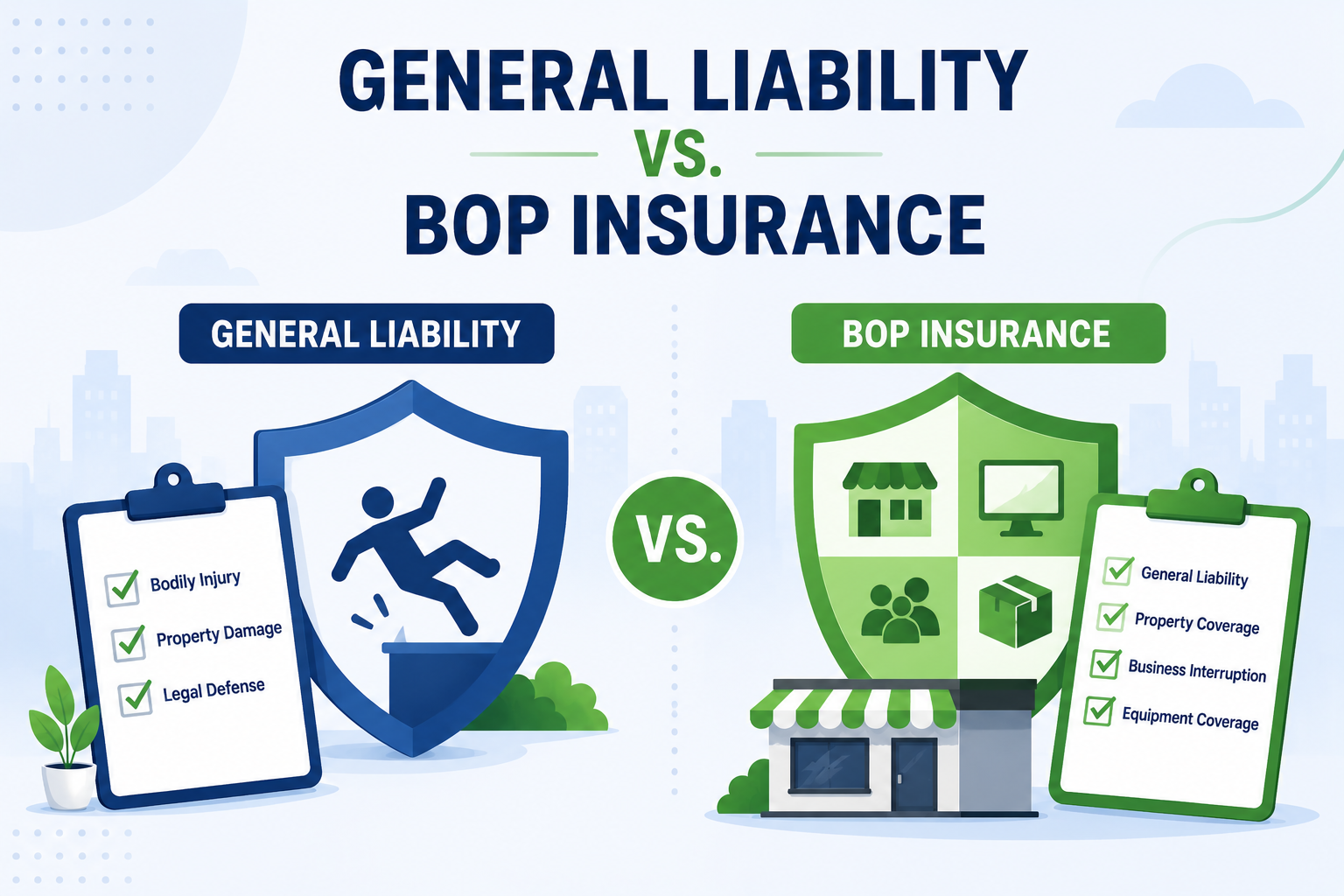
General Liability Vs BOP Insurance - InsuranceBlip
General Liability vs BOP
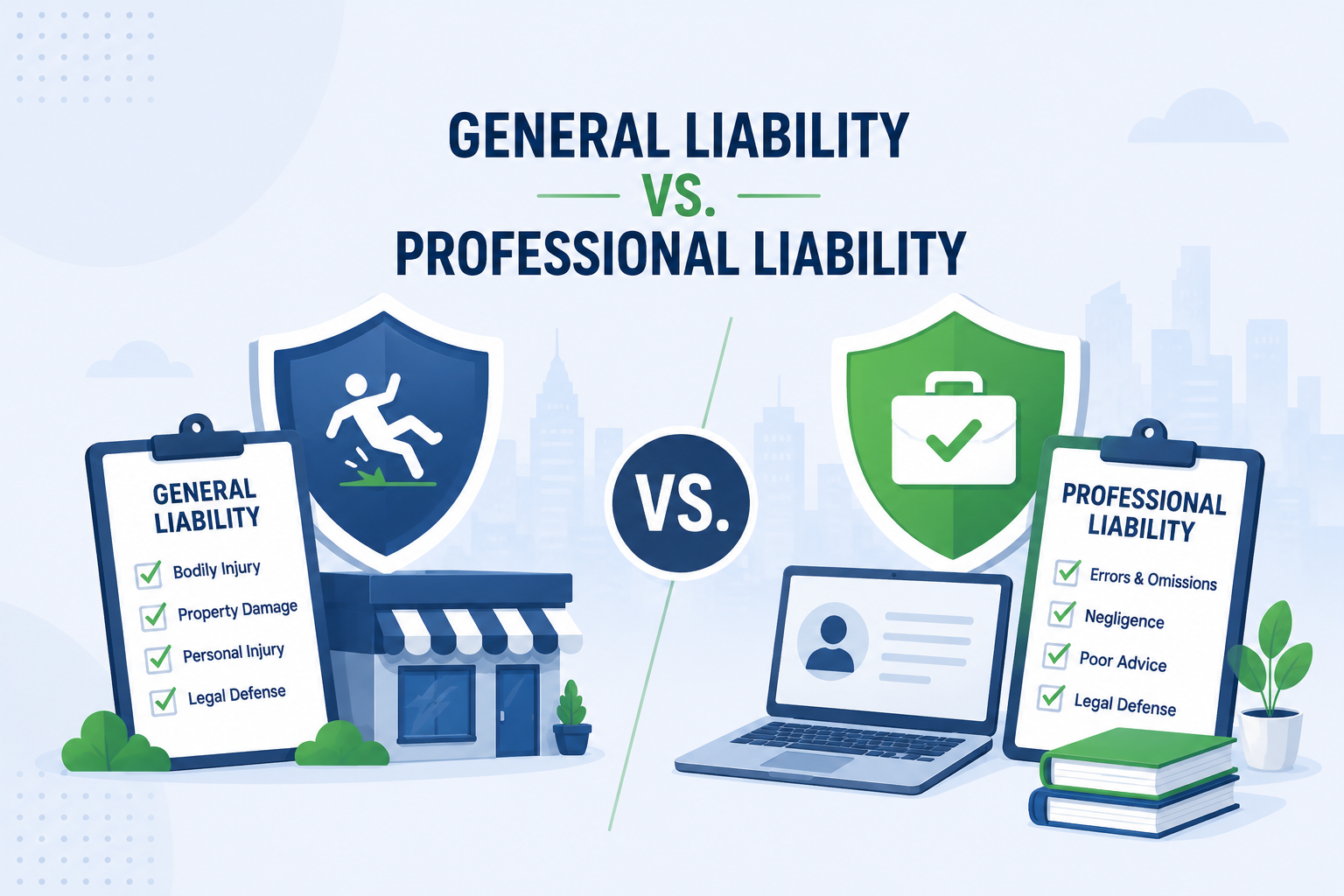
General Liability Vs Professional Liability - Insuranceblip
General Liability vs Professional Liability
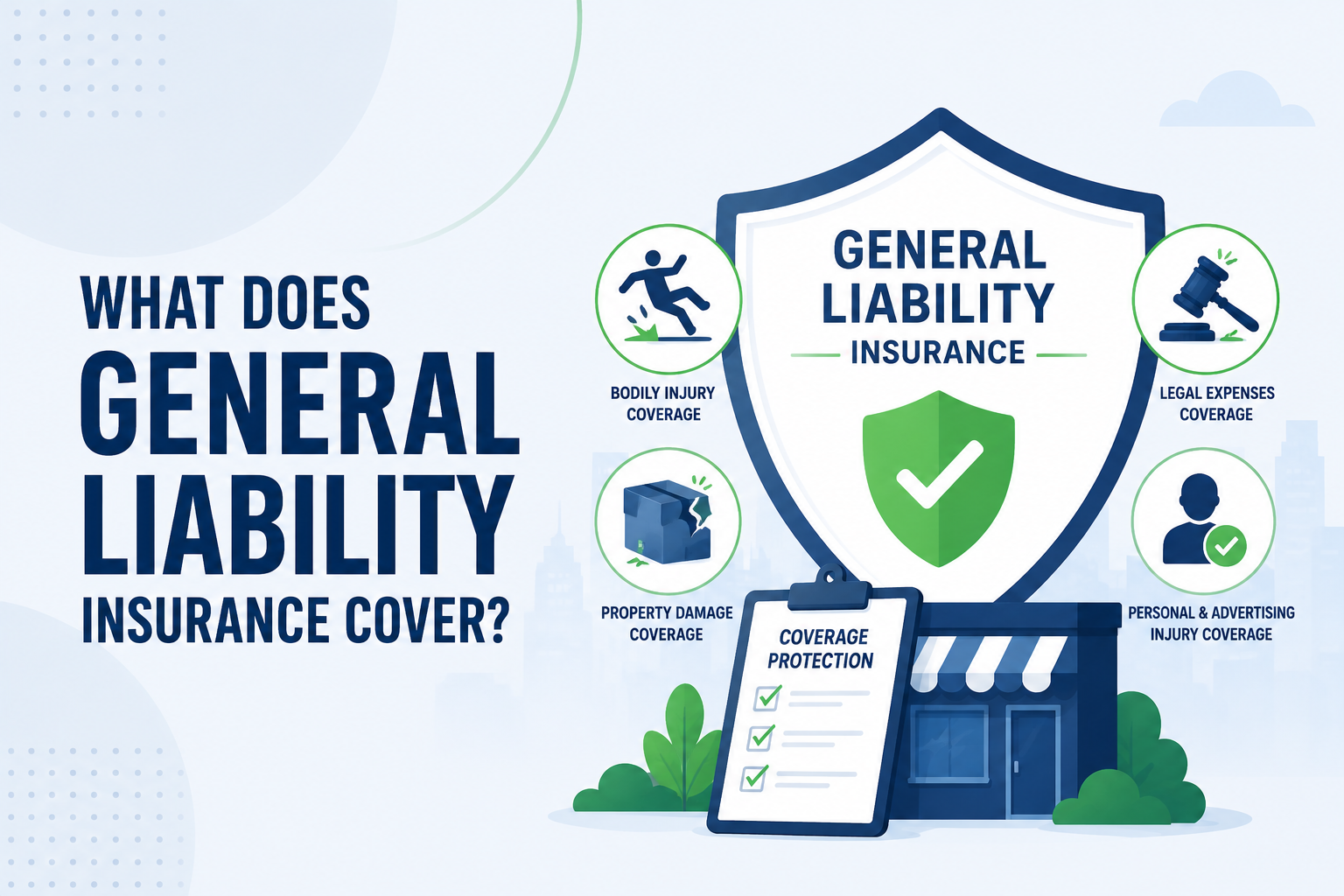
What does General Liability Insurance Cover - InsuranceBlip
What Does General Liability Insurance Cover
How much does business insurance cost - Insuranceblip
How Much Does Business Insurance Cost

Explore By Insurance Types

Auto Insurance
Business Insurance
Health Insurance
Home Insurance
Life Insurance
Travel Insurance

Frequently Asked Questions

Do sole proprietors need business insurance?

Sole proprietors are not generally required by law to carry general liability insurance, but they are not exempt from workers’ compensation requirements once they hire employees. More importantly, sole proprietors carry full personal liability for business debts and claims, since there is no legal separation between the owner and the business the way there is with an LLC or corporation. Many sole proprietors choose to carry general liability and professional liability coverage specifically because their personal assets, including their home and savings, are otherwise directly exposed.

Is general liability insurance mandatory?

Not by law in most states. It is mandatory in practice for most businesses, because commercial landlords, client contracts, and lenders require it as a condition of doing business with you. See our full explainer on what business insurance actually covers for more on how general liability fits into your broader coverage picture: What Is Business Insurance?

What insurance is required to get a business license?

This varies by state and industry. Some licensing boards require proof of specific coverage, commonly a surety bond or a professional liability policy, before issuing a license, particularly for contractors, healthcare providers, and financial services professionals. Other industries have no insurance requirement at the licensing stage at all. Check your state’s specific licensing board requirements directly, since there is no universal standard that applies across industries or states.

Know What's Required, Then Decide What's Wise

Start by identifying what is legally required for your specific situation: workers' compensation if you have employees, commercial auto if you use vehicles for work, and any licensing specific requirements tied to your profession. From there, look at what your landlord, clients, or lenders require as a condition of doing business with you. What is left after that is a judgment call about risk, and for most businesses, general liability coverage is worth carrying even when nobody is forcing the issue. The businesses that skip it are usually the ones that find out the hard way exactly why everyone else carries it.

Trusted Insurance Resources

Find Out What Coverage You Actually Need

Once you know what is required, the next step is understanding what it costs and how much coverage makes sense for your business.

Try Business Insurance CalculatorExplore Insurance Guides

At A Galance

Insurance Tools & Estimators

Use our free tools to estimate insurance costs before you shop. No personal information required just straight forward estimates.

Auto Insurance Calculator

Estimate your car insurance costs based on your age range, driving history, vehicle type, coverage level, & location. Understand how each factor affects your premium.

Life Insurance Needs Calculator

Calculate how much life insurance coverage your family might need based on your income, debts, and financial goals.

Health Insurance Estimator

Understand how premiums, deductible, out-of-pocket costs vary across different plans. Useful for comparing coverage options during enrollment or life change.

Business Insurance Estimator

Estimate general liability and small business insurance costs based on your industry, business size, and coverage needs.

Homeowners Insurance Calculator

Estimate how much homeowners insurance might cost based on your property value, location, and coverage needs.

Travel Insurance Calculator

Estimate trip protection costs based on your destination, trip duration, and the type of coverage you need.