Menu
A Beginner's Guide
Business insurance is a contract between your company and an insurer: you pay a premium, and in return, the insurer covers financial losses from specific events — lawsuits, property damage, employee injuries, and other risks tied to running a business. It's not one policy but a category of coverages, and most businesses carry a combination of several rather than a single all-in-one plan.
The right combination depends on your industry, whether you have employees, whether you have a physical location, and how much risk your specific work carries. A freelance graphic designer and a construction contractor need almost entirely different coverage, even though both are "small businesses."
The mechanism is simple, even though the coverage options aren't. You pay a monthly or annual premium to keep a policy active. If a covered event happens — a customer is injured on your premises, a client sues over a mistake in your work, a fire damages your equipment — you file a claim, and your insurer pays out up to your policy's limit, minus any deductible.
Two things determine what you're actually protected against: which policies you carry and how high your coverage limits are. A business with only general liability insurance, for example, has no protection at all if an employee gets injured on the job — that requires a separate workers' compensation policy. This is why understanding the different types matters more than just knowing "business insurance" exists as a category.
Table of Contents
No single policy covers everything. Most businesses build coverage from some combination of the following:
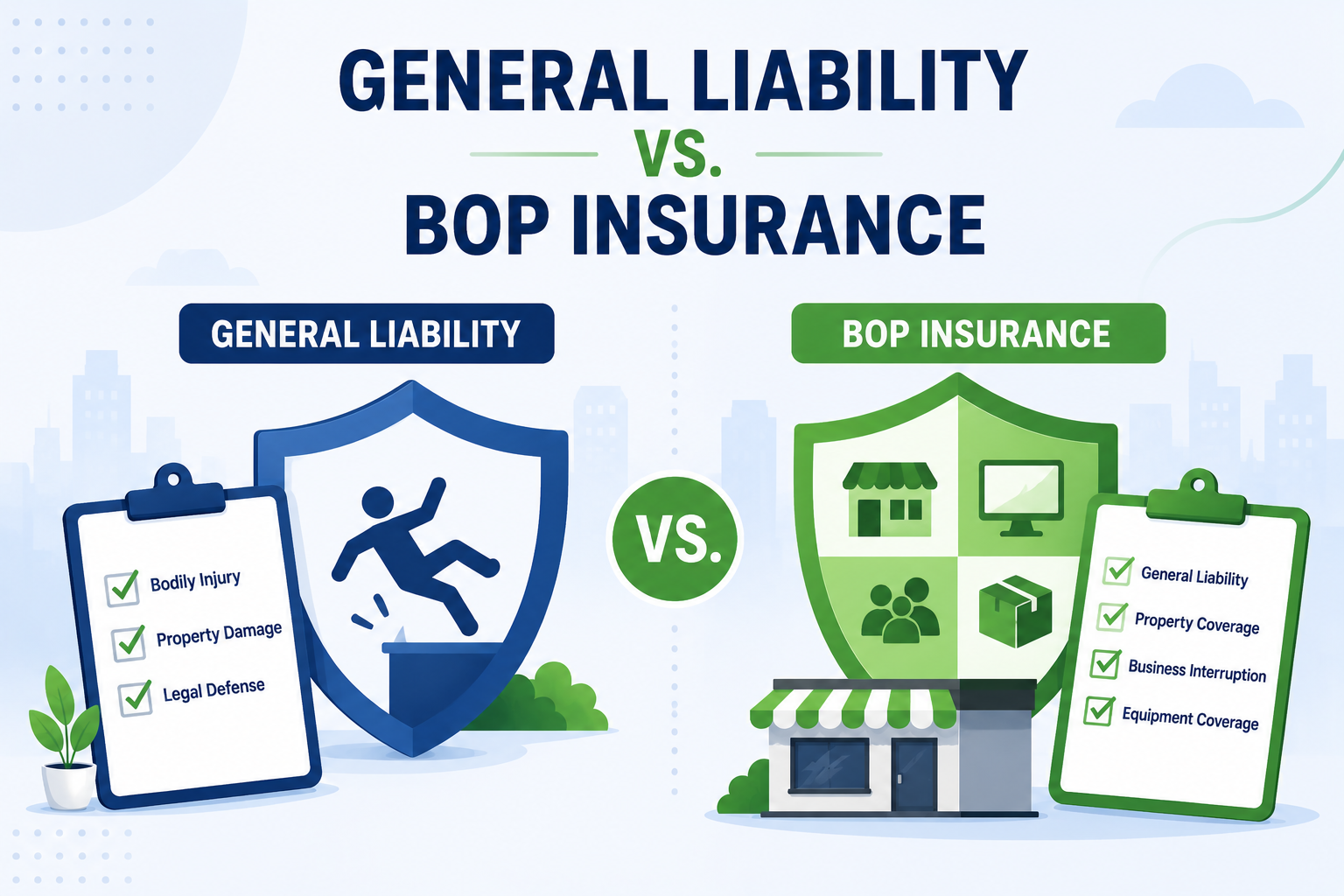
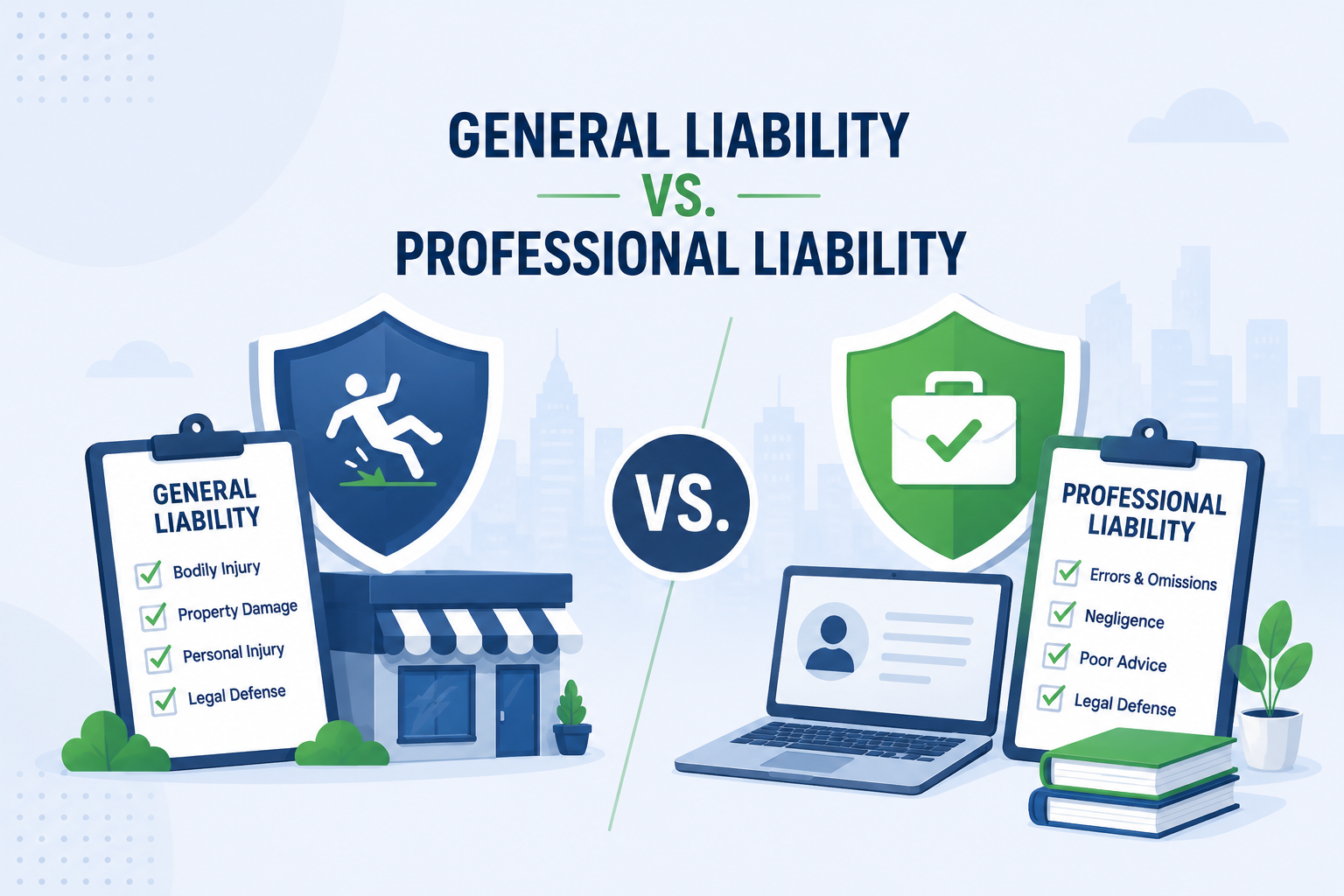
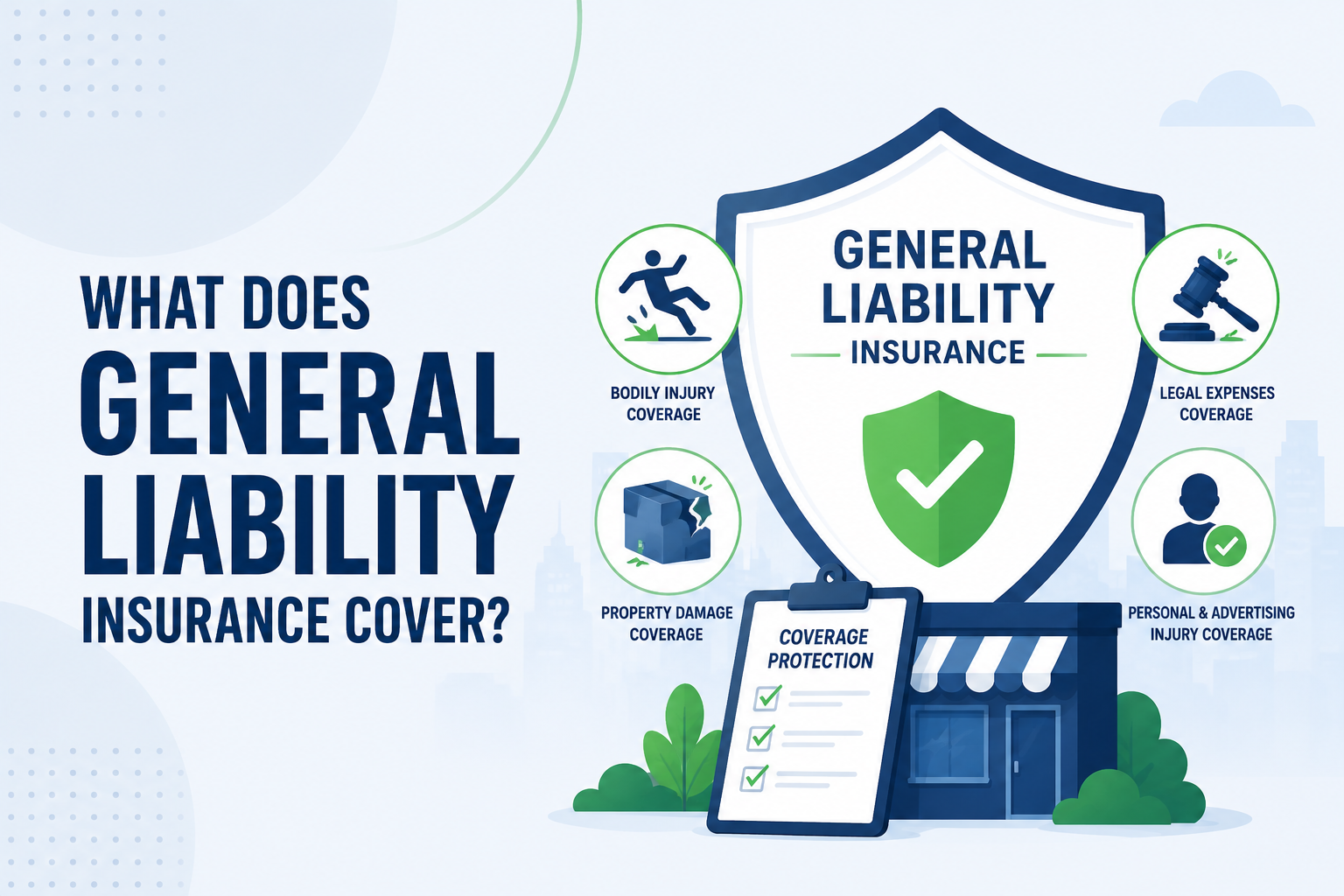
Covers third-party bodily injury, property damage, and advertising injury claims. The most common starting point for almost any business.
Bundles general liability and commercial property coverage into one policy, typically at a lower combined cost than buying both separately.
Covers claims that your professional advice or services caused a client financial harm. Essential for consultants and service-based businesses.
Covers medical costs and lost wages for employees injured on the job. Legally required in most states once you hire your first employee.
Covers vehicles used for business purposes, whether that's a company fleet or an employee's car used for deliveries.
Covers costs from data breaches and cyberattacks, including notification costs and legal fees. Increasingly relevant for any business storing customer data online.
For a full breakdown of the most common one, see what general liability insurance covers.
Business insurance costs vary more than almost any other insurance type, because premiums are calculated from your industry, revenue, employee count, location, and claims history — not a simple age-and-location formula like auto insurance uses.
| Policy Type | Typical Annual Cost |
|---|---|
| General Liability | $500 – $1,500 |
| Business Owner's Policy (BOP) | $800 – $2,500 |
| Professional Liability (E&O) | $500 – $3,000 |
| Commercial Auto | $1,200 – $2,400 |
| Cyber Liability | $800 – $2,000 |
For a closer look at what drives these numbers up or down for your specific business, see our full guide: How Much Does Business Insurance Cost? — or get a personalized estimate with our Business Insurance Calculator.
It depends on the type and your state. Workers’ compensation is legally required in most states once you have employees — the exact threshold varies by state. Commercial auto is required if your vehicles are used for business purposes. General liability isn’t legally mandated in most states, but it’s commonly required by commercial landlords, client contracts, and professional licensing bodies. See our full breakdown: Is Business Insurance Required?
General liability is one specific type of business insurance — it covers third-party injury and property damage claims. “Business insurance” is the broader category that includes GL alongside workers’ comp, professional liability, commercial property, and other coverages. Most businesses need several of these together, not just GL alone.
Legally, in many cases, yes — outside of workers’ comp and commercial auto requirements. Practically, it’s a significant risk. A single lawsuit, injury claim, or property loss without coverage can be enough to end a small business financially. Most commercial landlords and client contracts also require proof of insurance before you can operate.
Business insurance isn't one policy — it's a set of choices built around your specific risks. A solo consultant, a retail shop, and a construction contractor all need meaningfully different combinations, even under the same "business insurance" label. Start with what's legally required for your situation, then layer in coverage based on what would genuinely hurt if it went wrong without protection.
Understanding your coverage options is the first step. The next is figuring out exactly what your business needs and what it will cost.
Try Business Insurance CalculatorExplore Insurance GuidesAt A Galance
Use our free tools to estimate insurance costs before you shop. No personal information required just straight forward estimates.
Calculate how much life insurance coverage your family might need based on your income, debts, and financial goals.
Estimate how much homeowners insurance might cost based on your property value, location, and coverage needs.
Estimate trip protection costs based on your destination, trip duration, and the type of coverage you need.
Estimate your car insurance costs based on your age range, driving history, vehicle type, coverage level, & location. Understand how each factor affects your premium.
Understand how premiums, deductible, out-of-pocket costs vary across different plans. Useful for comparing coverage options during enrollment or life change.
© 2026 InsuranceBlip. All rights reserved. Website created & managed by Infolytics.