A standard homeowners policy covers six core areas: the structure of your home, other structures on your property, your personal belongings, additional living expenses if your home becomes unlivable, personal liability if someone is injured, and medical payments for minor guest injuries. This combination is sometimes called hazard insurance, a slightly older term for the same core coverage, though homeowners insurance is the more common phrase today.
Each of these six areas has its own coverage limit, its own set of covered events, and its own gaps, which is exactly why understanding the full breakdown matters more than knowing the general categories exist. Two homeowners with the same policy type can end up with very different actual protection depending on how their limits are set and which optional coverages they have or have not added.
How Homeowners Insurance Coverage Works
Your policy responds to what insurers call a covered peril, meaning a specific cause of loss the policy lists as included, such as fire, windstorm, or theft. Most standard policies use one of two structures: named peril, which only covers the specific causes of loss listed in the policy, or open peril, which covers everything except what is specifically excluded. Open peril policies generally offer broader protection but tend to cost more, and the difference matters most when an unusual type of damage occurs that a named peril policy simply does not list.
When a covered event happens, you file a claim, and your insurer pays out up to the specific limit for that coverage category, minus your deductible. This is where many homeowners are surprised to learn that their overall policy limit is not one single number. Instead, each of the six core coverage types below typically has its own separate limit, calculated as a portion of your total dwelling coverage rather than an independent number you choose directly.
Estimate Your Home Insurance Cost
Get a quick home insurance cost estimate based on your home value, location, property age, coverage level, and deductible.
Rachel Morgan covers insurance coverage analysis at InsuranceBlip. Her work examines the gap between what policies promise and what they actually pay out, helping readers understand their coverage before they ever need to use it.
The physical structure of your home, including the roof, walls, and built-in systems, if damaged by a covered event
Set based on rebuild cost, not market value
Other Structures
Structures on your property separate from the home itself, such as a detached garage, shed, or fence
Typically 10 percent of dwelling coverage
Personal Property
Your belongings inside the home, including furniture, electronics, and clothing
Typically 50 to 70 percent of dwelling coverage
Loss of Use
Additional living expenses, such as a hotel stay, if your home becomes temporarily uninhabitable
Typically 20 to 30 percent of dwelling coverage
Personal Liability
Legal and medical costs if someone is injured on your property or you accidentally damage someone else's property
Commonly $100,000 to $500,000
Medical Payments to Others
Minor medical expenses for a guest injured on your property, regardless of fault, and separate from liability coverage
Commonly $1,000 to $5,000
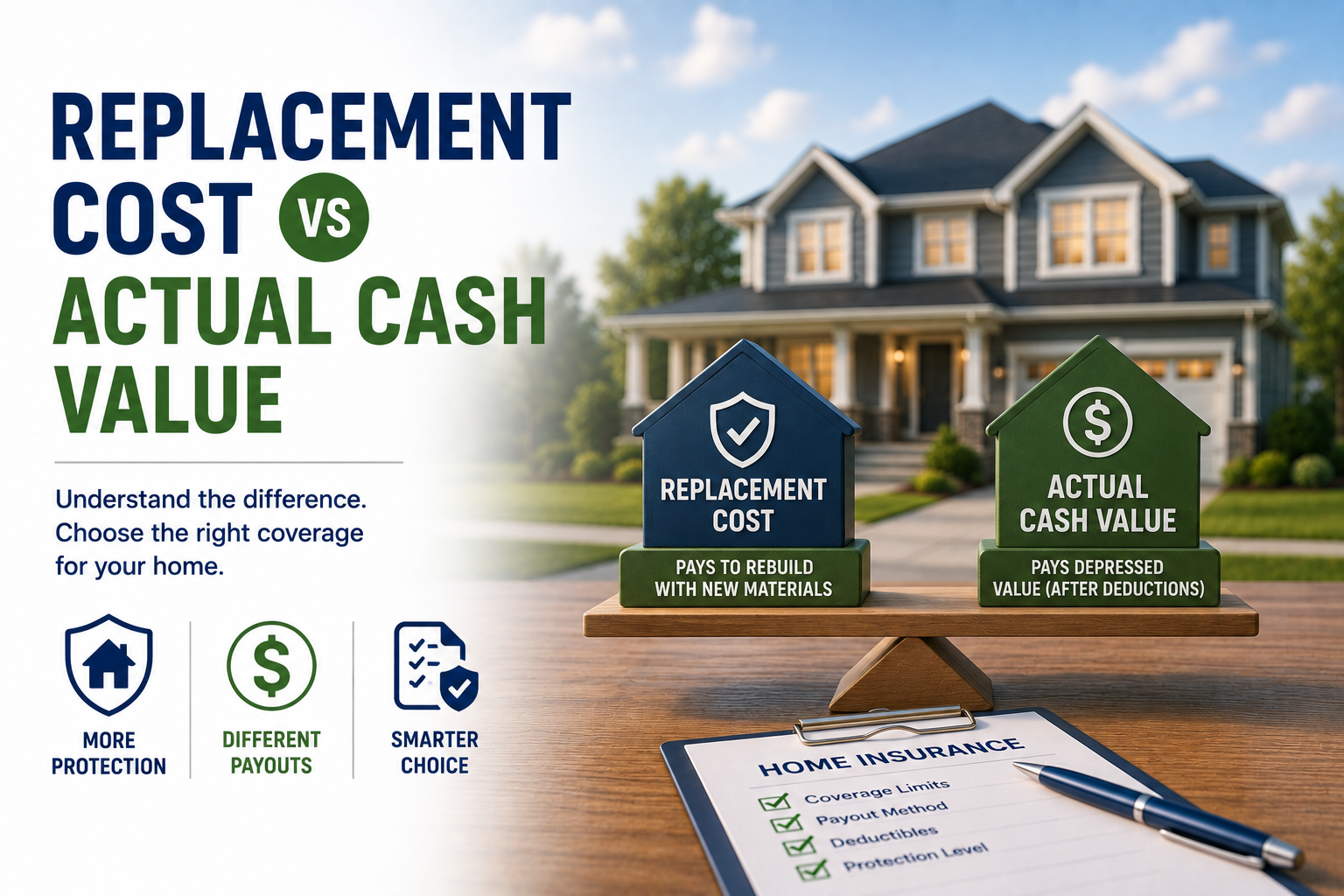
Dwelling coverage deserves particular attention, since it is calculated based on what it would actually cost to rebuild your home, not what you paid for it or what it would sell for on the market. A home in an area with high construction costs can have a rebuild cost well above its market value, and insuring for market value instead of rebuild cost is one of the more common ways homeowners end up underinsured without realizing it.
What Homeowners Insurance Does Not Cover
Every standard policy excludes several categories of risk entirely, and these exclusions are consistent across nearly every insurer, not specific to any one company.
Flood damage.. Excluded from every standard policy regardless of coverage level, and requires a separate flood insurance policy. See does home insurance cover flood damage for the full breakdown.
Earthquake damage.. Also excluded universally, requiring a separate earthquake endorsement or standalone policy in most states.
Normal wear and tear or lack of maintenance.. Insurance covers sudden, accidental damage, not the gradual deterioration of a home from age or deferred maintenance.
High-value items above their sublimit.. Standard policies cap coverage for categories like jewelry, art, and collectibles far below their actual value, often at just a few thousand dollars, unless a specific rider or floater is added.
Business equipment and inventory.. A homeowners policy is not designed for commercial use, and running a business from home typically requires additional coverage.
Sewer or drain backup.. Often excluded unless a specific endorsement is added, despite being a relatively common and expensive type of water damage claim.
Intentional damage.. Deliberate damage caused by the homeowner is excluded from every policy, as is true across virtually all insurance types.
War and nuclear events.. A standard exclusion across the entire insurance industry, not specific to homeowners policies.
Coverage Limits and How They're Calculated
Most homeowners set their dwelling coverage first, since it drives the other limits as a percentage. Other structures coverage is commonly set at ten percent of the dwelling limit, meaning a home insured for three hundred thousand dollars typically carries around thirty thousand dollars in other structures coverage automatically. Personal property coverage usually falls between fifty and seventy percent of the dwelling limit, and loss of use coverage between twenty and thirty percent.
These percentages are defaults, not fixed rules, and many insurers allow you to adjust them individually if your situation calls for it. A homeowner with an unusually valuable detached workshop, for example, might increase other structures coverage above the standard ten percent default rather than accepting a limit that would fall short if that specific structure were damaged.
Common Scenarios
A dwelling coverage gap.
A homeowner insures their home based on the price they paid for it several years ago, without accounting for rising construction costs since then. A house fire causes a total loss, and the payout falls thousands of dollars short of what it actually costs to rebuild, since dwelling coverage should have been based on current rebuild cost rather than the original purchase price.
A high-value item surprise.
A homeowner assumes their engagement ring, worth several thousand dollars, is fully covered under standard personal property coverage. After a theft, they discover their policy caps jewelry claims at a sublimit far below the ring's actual value, since no specific rider had been added to cover it at full value.
A liability claim handled correctly.
A guest slips on an icy walkway and breaks their wrist. The homeowner's liability coverage pays the guest's medical bills and legal costs when the guest pursues a claim, exactly the scenario personal liability coverage exists to handle, and the homeowner's personal assets remain protected throughout the process.
Flood damage, earthquake damage, normal wear and tear, business use of the home, and high-value items above their sublimit are the most common exclusions. Each of these either requires a separate policy or endorsement, or in the case of wear and tear, is simply outside what any insurance policy is designed to address.
Does homeowners insurance cover mold damage?
It depends on the cause. Mold resulting from a sudden covered event, such as a burst pipe that is addressed promptly, is often covered as part of that claim. Mold resulting from long-term moisture, humidity, or a maintenance issue that was not addressed is typically excluded, since insurers treat that as a preventable maintenance problem rather than a sudden loss.
Are high-value items like jewelry fully covered?
Usually not at their full value under standard coverage. Most policies cap categories like jewelry, art, and collectibles at a sublimit well below typical replacement cost. Adding a scheduled personal property rider or floater for specific high-value items is the standard way to close this gap.
Know Your Limits, Not Just Your Categories
Understanding that homeowners insurance covers six core areas is only the first layer. The more important layer is knowing how each specific limit is calculated, particularly dwelling coverage based on rebuild cost, and where the common exclusions and sublimits sit. A policy that looks comprehensive on paper can still leave a real gap if those specific numbers were never reviewed against your actual home and belongings.
Use our free tools to estimate insurance costs before you shop. No personal information required just straight forward estimates.
Auto Insurance Calculator
Estimate your car insurance costs based on your age range, driving history, vehicle type, coverage level, & location. Understand how each factor affects your premium.
Life Insurance Needs Calculator
Calculate how much life insurance coverage your family might need based on your income, debts, and financial goals.
Health Insurance Estimator
Understand how premiums, deductible, out-of-pocket costs vary across different plans. Useful for comparing coverage options during enrollment or life change.
Business Insurance Estimator
Estimate general liability and small business insurance costs based on your industry, business size, and coverage needs.
Homeowners Insurance Calculator
Estimate how much homeowners insurance might cost based on your property value, location, and coverage needs.
Travel Insurance Calculator
Estimate trip protection costs based on your destination, trip duration, and the type of coverage you need.