HO-3 is the standard policy form for most single-family homeowners, covering the dwelling broadly but covering personal belongings only against specifically listed causes of loss. HO-5 is a broader version of the same idea, covering both the dwelling and personal belongings against a wide range of causes unless specifically excluded, which generally means more protection at a higher cost. HO-6 is an entirely different policy built for condo and co-op owners, covering the interior of the unit and personal belongings, since the building structure itself is covered separately by the condo association's master policy.
What Each Policy Type Is For
HO-3 is by far the most common homeowners policy form in the country, built for single-family homeowners who want solid, well-rounded coverage without paying for the broadest possible protection. Under an HO-3 policy, the dwelling itself is covered on an open peril basis, meaning it is covered against any cause of loss except what is specifically excluded, while personal belongings are covered on a named peril basis, meaning only the specific causes of loss listed in the policy are covered. This asymmetry is the defining feature of an HO-3 policy and the main thing that distinguishes it from HO-5.
HO-5 removes that asymmetry by covering personal belongings on the same open peril basis as the dwelling, which closes a real gap that HO-3 leaves open. If a type of damage occurs that is not on the named peril list for personal property, an HO-3 policy simply will not pay for it, while an HO-5 policy generally will, unless that specific cause is excluded. HO-5 policies also commonly come with higher standard coverage limits, making them a common choice for higher-value homes or homeowners who want the broadest protection available without customizing individual endorsements.
HO-6 serves a completely different situation rather than sitting above or below HO-3 and HO-5 on the same spectrum. Condo and co-op owners do not own the building structure itself, which is covered by the condo association's master policy, so an HO-6 policy is built specifically to cover what the owner is actually responsible for: the interior of the unit, including built-in fixtures and any upgrades, along with personal belongings and liability. Comparing HO-6 to HO-3 or HO-5 directly does not quite make sense, since it is solving a different problem entirely rather than offering more or less of the same coverage. For the full breakdown of what any of these forms actually cover coverage category by coverage category, see what homeowners insurance covers.
Table of Contents
Emily Foster
Insurance Policy Analyst
Emily Foster writes insurance comparison content at InsuranceBlip. Her work explains costly decisions like minimum versus full coverage and term versus whole life, helping readers choose coverage based on their situation rather than guesswork.
A homeowner's personal belongings are damaged by a type of water related event not specifically listed among the named perils in their policy. Because personal property is covered on a named peril basis under HO-3, the claim is denied, even though the same policy would have covered comparable damage to the dwelling structure itself, since dwelling coverage is written on the broader open peril basis.
An HO-5 scenario.
A homeowner in the same situation, but with an HO-5 policy instead, files the identical claim for damaged belongings. Because personal property is covered on an open peril basis under HO-5, and the specific cause of loss is not on the policy's exclusion list, the claim is paid, closing exactly the gap the HO-3 policyholder ran into.
An HO-6 scenario.
A condo owner's unit sustains interior water damage from a source inside their own walls, along with damage to several pieces of furniture. Their HO-6 policy covers the interior repairs and the damaged furniture, while the condo association's separate master policy would handle any damage to the building's exterior or shared structural elements, illustrating how the two policies work together rather than either one covering everything alone.
Which One Do You Need?
For most single-family homeowners, HO-3 remains the standard choice, offering solid protection at a lower cost than HO-5, and the personal property gap it leaves open rarely becomes a real problem for typical households. HO-5 is worth the additional cost for homeowners with higher-value belongings, a higher-value home overall, or simply a preference for the broadest available protection without needing to think carefully about which specific perils are and are not listed.
HO-6 is not really a choice at all in the sense that HO-3 versus HO-5 is, since it applies specifically to condo and co-op ownership rather than being an upgrade path from the other two. If you own a condo, HO-6 is the relevant policy type, and the more useful comparison is not against HO-3 or HO-5 but against your condo association's master policy, to understand exactly where its coverage ends and your own HO-6 policy needs to begin.
Estimate Your Home Insurance Cost
Get a quick home insurance cost estimate based on your home value, location, property age, coverage level, and deductible.
HO-3 is by a wide margin the most commonly issued homeowners policy form in the United States, since it fits the typical single-family home situation well and offers a reasonable balance between cost and coverage breadth.
Can I upgrade from HO-3 to HO-5?
Yes, in most cases. Many insurers allow homeowners to move from an HO-3 to an HO-5 policy, either at renewal or by request, provided the home qualifies under that insurer’s underwriting guidelines. Since HO-5 mainly extends personal property to open peril coverage, this is a relatively straightforward upgrade rather than requiring a completely different underwriting process.
Does a condo need HO-6 or a regular policy?
A condo needs HO-6 specifically, not a standard HO-3 or HO-5 policy, since those forms are built to cover an entire structure that a condo owner does not actually own. Attempting to insure a condo unit with a standard single-family policy form would leave a significant mismatch between what the policy covers and what the owner is actually responsible for.
Match the Form to What You Actually Own
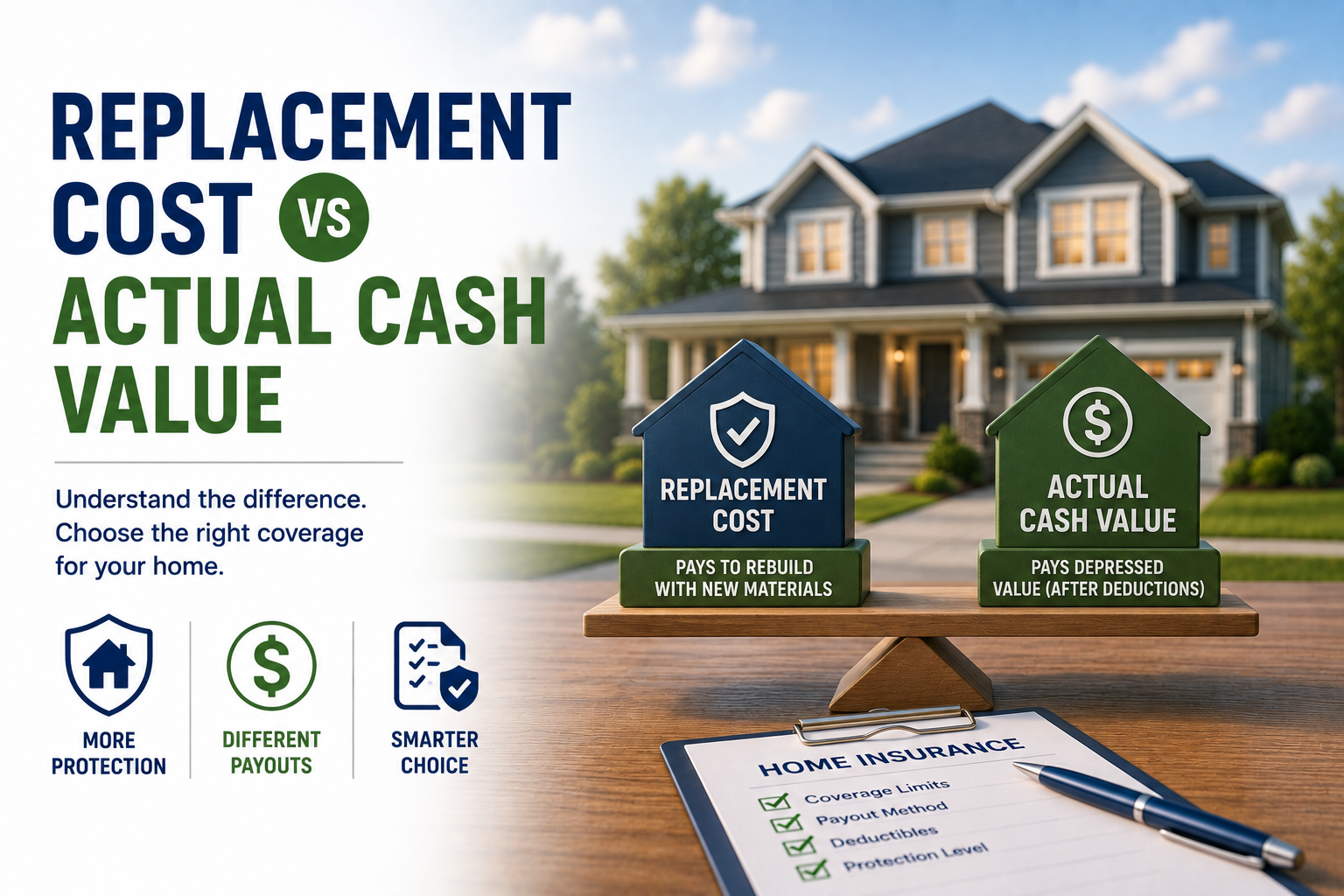
The difference between HO-3 and HO-5 comes down to how broadly your personal belongings are protected, with HO-5 closing a real gap that HO-3 leaves open at a higher cost. HO-6 is not a competing option to either but a distinct policy type built for condo ownership specifically. Knowing which category your situation falls into, single-family homeowner deciding between coverage breadth, or condo owner needing the right form entirely, makes this a much simpler decision than the three-way naming might suggest. Once you have settled on a policy form, the next decision worth understanding is replacement cost vs actual cash value, since that choice affects how much any of these policies actually pay out when you file a claim.
Use our free tools to estimate insurance costs before you shop. No personal information required just straight forward estimates.
Auto Insurance Calculator
Estimate your car insurance costs based on your age range, driving history, vehicle type, coverage level, & location. Understand how each factor affects your premium.
Life Insurance Needs Calculator
Calculate how much life insurance coverage your family might need based on your income, debts, and financial goals.
Health Insurance Estimator
Understand how premiums, deductible, out-of-pocket costs vary across different plans. Useful for comparing coverage options during enrollment or life change.
Business Insurance Estimator
Estimate general liability and small business insurance costs based on your industry, business size, and coverage needs.
Homeowners Insurance Calculator
Estimate how much homeowners insurance might cost based on your property value, location, and coverage needs.
Travel Insurance Calculator
Estimate trip protection costs based on your destination, trip duration, and the type of coverage you need.