What Is Home Insurance?

A Beginner's Guide

Home insurance is a contract between you and an insurer: you pay a premium, and in return, the insurer covers financial losses to your home and belongings from specific events, such as fire, theft, or certain weather damage, along with liability protection if someone is injured on your property. Most people refer to this as homeowners insurance, though renters and condo owners carry related but distinct versions of the same basic idea.

The specific coverage you need depends on what you own and how you own it. A single-family homeowner, a condo owner, and a renter all face different risks and typically need different policy types, even though all three fall under the general category of home insurance.

How Home Insurance Works

The mechanism is straightforward, even though the coverage details take longer to understand. You pay a monthly or annual premium to keep your policy active. If a covered event damages your home or belongings, you file a claim, and your insurer pays out up to your policy's limit, minus your deductible.

The deductible is the amount you pay out of pocket before your insurance coverage kicks in for a specific claim. If your policy has a one thousand dollar deductible and a covered event causes eight thousand dollars in damage, you pay the first thousand and your insurer covers the remaining seven thousand. Choosing a higher deductible generally lowers your monthly premium, since you are absorbing more of the initial risk yourself, while a lower deductible raises your premium in exchange for less out of pocket cost if you ever file a claim.

Estimate Your Home Insurance Cost

Get a quick home insurance cost estimate based on your home value, location, property age, coverage level, and deductible.

Daniel Carter
Insurance Content Specialist
Daniel Carter writes beginner focused insurance guides at InsuranceBlip. His work explains policy language, coverage options, and common insurance decisions in plain English, with a focus on helping first time buyers understand auto, health, and life insurance.


What Home Insurance Typically Covers

Three categories cover most of the legally mandated coverage a business will encounter.

Dwelling Coverage

Covers the physical structure of your home if it is damaged by a covered event such as fire, wind, or lightning.

Personal Property

Covers your belongings inside the home, including furniture, electronics, and clothing, if they are damaged, destroyed, or stolen.

Liability Protection

Covers legal and medical costs if someone is injured on your property or you accidentally damage someone else's property.

Loss of Use

Covers temporary living expenses, such as a hotel stay, if your home becomes uninhabitable due to a covered event.

Other Structures

Covers structures on your property separate from the home itself, such as a detached garage, fence, or shed.

Medical Payments

Covers minor medical expenses for a guest injured on your property, separate from and typically smaller than liability coverage.

For a full breakdown of what is and is not included, see what homeowners insurance covers.

Who Needs Home Insurance?

Anyone with a mortgage is required by their lender to carry home insurance, since the lender has a financial interest in protecting the property that secures the loan. Homeowners who own their home outright are not legally required to carry insurance in most states, but going without it means personal responsibility for the full cost of any damage, theft, or liability claim.

Renters carry a related but different policy, since they do not own the structure itself but still need coverage for their personal belongings and liability. Condo owners typically need a version of coverage that fills the gap between what the condo association's master policy covers and what remains the owner's individual responsibility, most commonly the interior of the unit and personal belongings.

How Much Does Home Insurance Cost?

Home insurance costs vary significantly based on your home's value, location, construction type, and the coverage level you choose, unlike some insurance types that price primarily off personal risk factors.

Coverage Level Typical Annual Cost Best For
Basic $900 – $1,400 Minimum lender-required coverage on a lower-value home
Standard $1,400 – $2,200 Most single-family homes with typical coverage needs
Enhanced $2,200 – $3,200 Higher-value homes or homes in higher-risk areas
Premium $3,200 – $4,500+ High-value homes, extensive belongings, or added coverage such as flood or umbrella liability

These figures are national estimates. Your actual cost depends heavily on your home’s specific value, location, and claims history. For a full breakdown of what drives your specific cost up or down, including how it varies by state and construction type, see how much homeowners insurance costs, or get a personalized estimate with our Home Insurance Calculator.

Browse Insurance Guides

Insurance Basics Guides
Insurance Cost Guides
Insurance Comparison Guides
Insurance Coverage Guides

Insights From Recent Articles

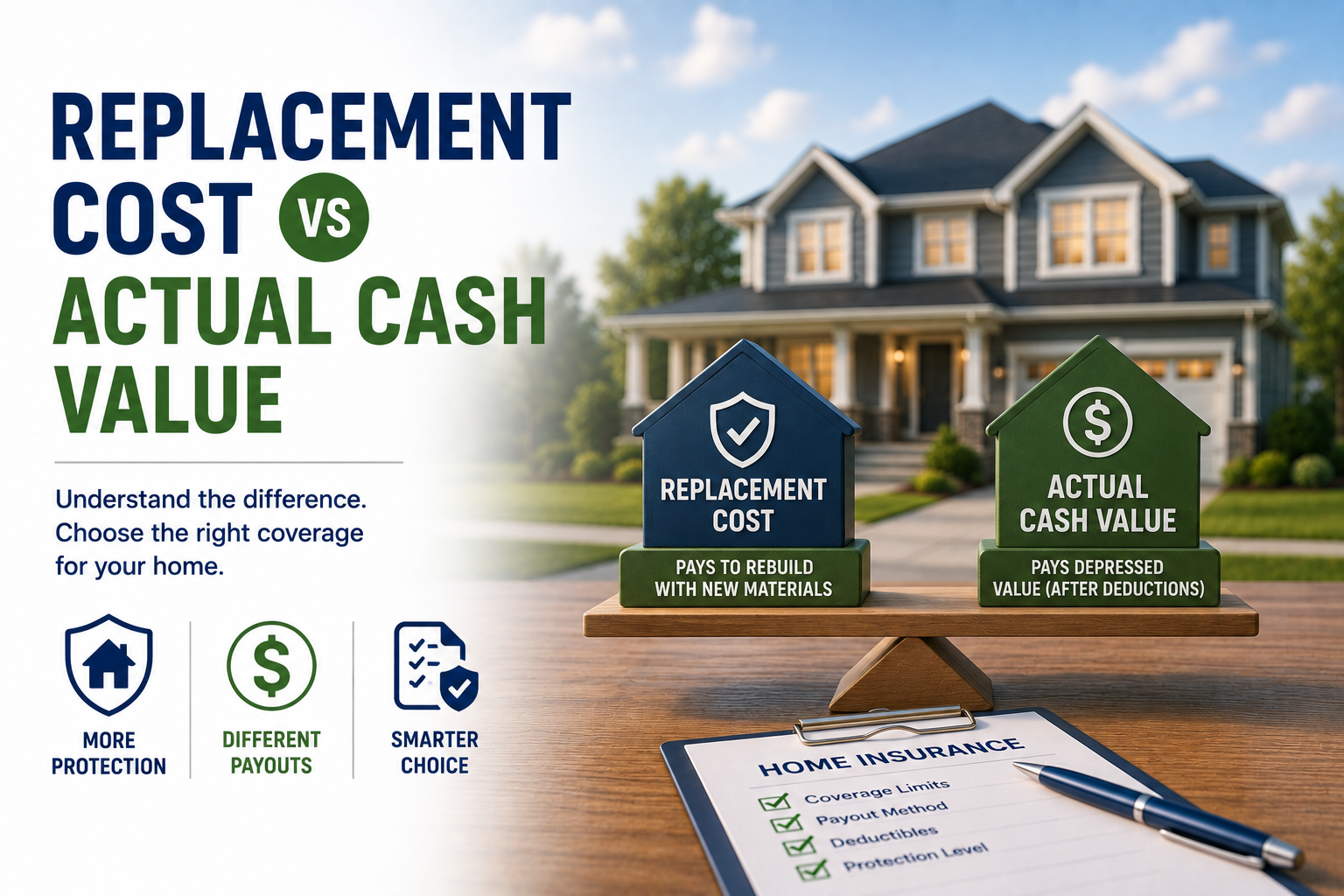
replacement cost vs actual cash value
Replacement Cost vs Actual Cash Value
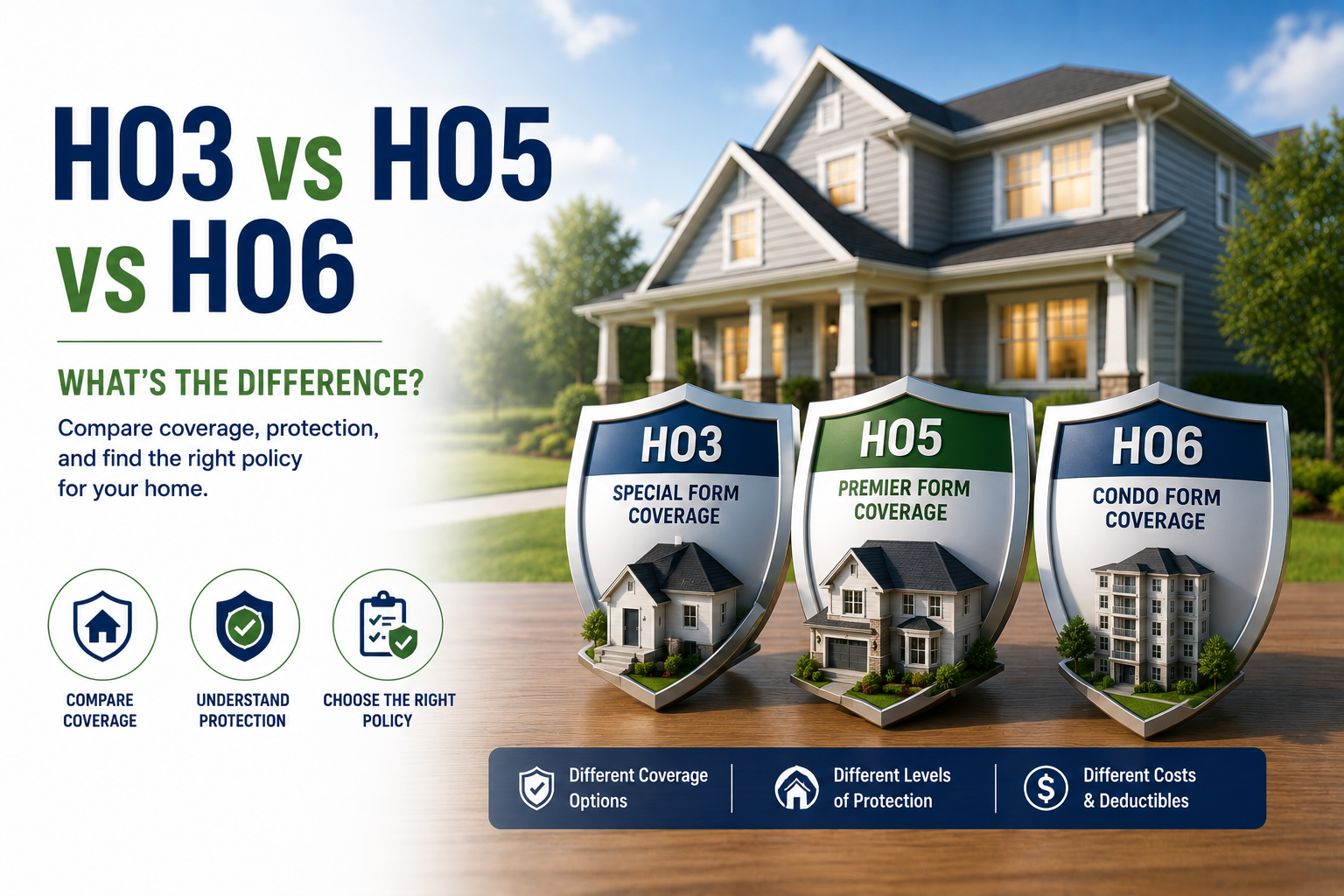
ho3 vs ho5 vs ho6
HO-3 vs HO-5 vs HO-6
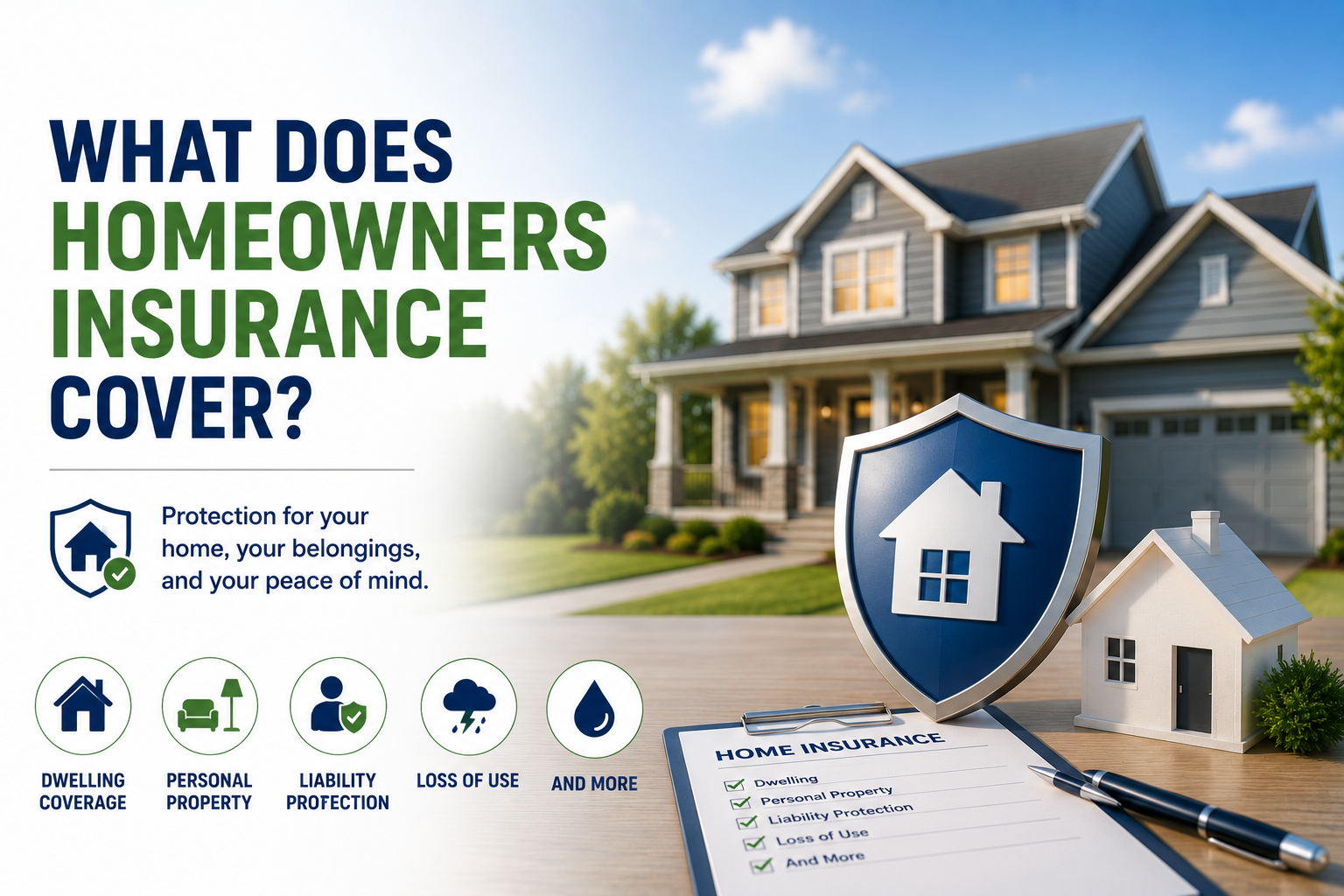
what does homeowners insurance cover
What Does Homeowners Insurance Cover
Does Home Insurance Cover Flood Damage
how much does homeowners insurance cost
How Much Does Homeowners Insurance Cost

Explore By Insurance Types

Auto Insurance
Business Insurance
Health Insurance
Home Insurance
Life Insurance
Travel Insurance

Frequently Asked Questions

Is home insurance required by law?

Not by state or federal law in most cases, but mortgage lenders universally require it as a condition of the loan, which is why the vast majority of homeowners carry it regardless of any legal mandate. Once a mortgage is paid off, the legal requirement disappears, though going without coverage at that point is a significant financial risk rather than a genuine advantage.

What's the difference between home insurance and homeowners insurance?
In practice, these terms are used interchangeably to describe the same coverage for someone who owns their home. Home insurance is sometimes used as a broader umbrella term that also encompasses renters and condo policies, while homeowners insurance specifically refers to the policy type for someone who owns a single-family home.
Do renters need home insurance?

Renters need a renters policy, which is a distinct and generally much less expensive version of home insurance. It covers personal belongings and liability but does not cover the building itself, since that responsibility belongs to the landlord or property owner. Many landlords now require proof of renters insurance as a condition of the lease.

Coverage Built Around What You Own

Home insurance is not one universal policy but a category that adapts to how you occupy your home, whether you own it outright, are still paying a mortgage, rent, or own a condo. Understanding the basic mechanism, how premiums, deductibles, and claims work together, makes it far easier to evaluate whether your current coverage actually matches what you own and what you would need to replace it.

Trusted Insurance Resources

Protect Your Home the Right Way

Understanding your coverage options is the first step. The next is figuring out exactly what your home needs and what it will cost.

Try Home Insurance CalculatorExplore Insurance Guides

At A Galance

Insurance Tools & Estimators

Use our free tools to estimate insurance costs before you shop. No personal information required just straight forward estimates.

Auto Insurance Calculator

Estimate your car insurance costs based on your age range, driving history, vehicle type, coverage level, & location. Understand how each factor affects your premium.

Life Insurance Needs Calculator

Calculate how much life insurance coverage your family might need based on your income, debts, and financial goals.

Health Insurance Estimator

Understand how premiums, deductible, out-of-pocket costs vary across different plans. Useful for comparing coverage options during enrollment or life change.

Business Insurance Estimator

Estimate general liability and small business insurance costs based on your industry, business size, and coverage needs.

Homeowners Insurance Calculator

Estimate how much homeowners insurance might cost based on your property value, location, and coverage needs.

Travel Insurance Calculator

Estimate trip protection costs based on your destination, trip duration, and the type of coverage you need.