

Auto insurance is one of the most important financial protections for drivers. It helps cover the costs of accidents, vehicle damage, medical expenses, and liability claims.
$167-225/mo
Varies by age & state (2026 avg)
$500 – $2,000
Most drivers choose $500 or $1,000
6 Core
Liability through uninsured motorist
$68–72/mo
State-required liability only
Every state in the U.S. requires drivers to carry some form of auto insurance, but coverage requirements and pricing can vary significantly depending on where you live and the type of protection you choose.
Understanding how auto insurance works — including coverage types, cost factors, and policy limits — can help you choose the right protection while avoiding unnecessary expenses.
To better understand potential costs, you can also use our Auto Insurance Cost Calculator to estimate monthly premiums based on common pricing factors.
Overview
Auto insurance is a contract between a driver and an insurance company that provides financial protection against losses resulting from accidents, theft, or damage.
In exchange for paying a premium, the insurer agrees to cover certain costs depending on the coverage included in the policy.
Most auto insurance policies include multiple types of coverage that protect both the driver and other people involved in an accident.
A fixed monthly or annual amount you pay to keep your policy active — whether or not you make a claim that month or year.
The amount you pay out of pocket when you file a claim before your insurer covers the rest. Common auto deductibles range from $250 to $1,500.
After your deductible, your insurer covers the remaining cost of repairs, medical bills, or liability claims — up to your policy's coverage limits.
Coverage
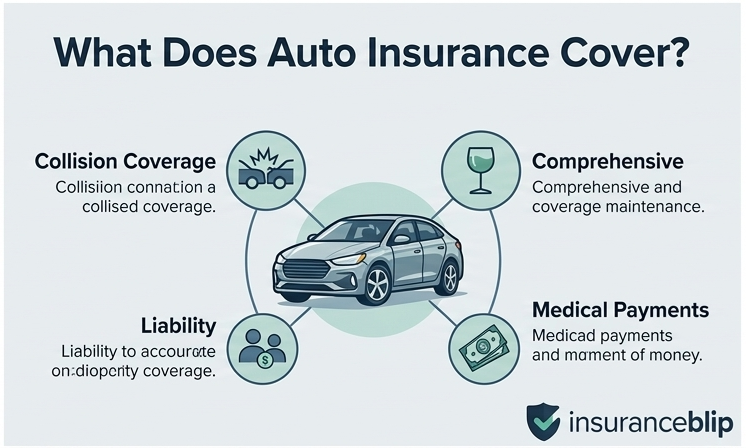
Auto insurance policies are built around five core coverage types — here is what each one actually protects.
Liability coverage pays for injuries or property damage you cause to others in an accident. It is the minimum coverage required in most states.
PIP coverage helps pay medical expenses for you and your passengers after an accident, regardless of fault.
This coverage protects you if you are hit by a driver who has little or no insurance.
Comprehensive coverage protects against non-collision events such as theft, vandalism, fire, weather damage, or falling objects.
Collision coverage pays for damage to your vehicle if you are involved in an accident, regardless of who is at fault.
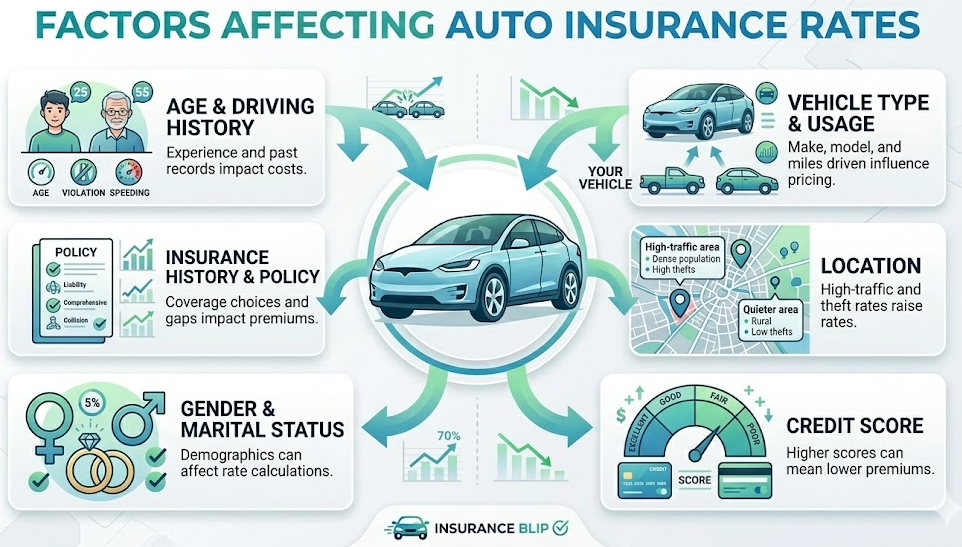
Insurance companies evaluate risk when calculating premiums. Some of the most important factors include:
Because each insurance company uses its own pricing model, quotes can vary even for drivers with similar profiles.
When Its Time
Auto insurance is legally required to register or operate a vehicle on public roads. Beyond the legal minimum, review your coverage whenever:
INTERACTIVE TOOL
Get a personalized estimate based on your age, ZIP, household, and tier — no signup, no spam.
Auto Insurance Costs
Drivers can often reduce insurance premiums by taking a few practical steps:
Decision Guide
Match your coverage to your actual situation — not just the cheapest option available.

Related Tools
Explore our featured tools related to auto insurance.
Get a personalised monthly premium estimate based on your age, driving history, vehicle type, coverage level, and location.
Compare minimum coverage vs full coverage to see the real cost difference & what each option actually protects.
Answer 5 quick questions about your driving habits and profile to find which auto insurance discounts you currently qualify
See exactly how changing your deductible from $500 to $1,000 or $1,500 affects your monthly premium — before you decide.
FAQ's
The most common questions readers ask about auto insurance coverage, cost, and claims.
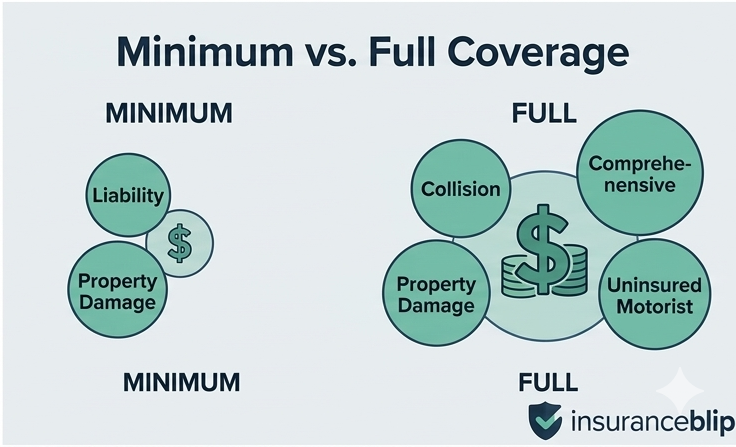
Minimum coverage (liability only) covers damage and injury you cause to other people — it does not cover your own vehicle. It meets your state’s legal requirement but leaves significant gaps if you are at fault in an accident. Full coverage adds collision (your car after an accident regardless of fault) and comprehensive (theft, weather, fire). Full coverage costs an average of $95/month more than minimum nationally. Whether it is worth it depends on your vehicle’s current value — if your car is worth less than 10x your annual collision and comprehensive premium, dropping to liability only may make sense. Read details here
At minimum, your state’s legal requirement. Most financial advisors recommend exceeding state minimums significantly — state minimum liability limits (often $25,000/$50,000) can be exhausted by a single serious accident, leaving you personally liable for the remainder. A common recommendation is 100/300/100 liability coverage (100K per person, 300K per accident, 100K property damage) plus collision and comprehensive if your vehicle has meaningful value. Read Details here
You may also find these tools helpful:
© 2026 InsuranceBlip. All rights reserved. Website created & managed by Infolytics.