General liability insurance is a business policy that covers the cost of third party claims involving bodily injury, property damage, and certain advertising related harms. It is the most common starting point for business coverage, and for many small businesses it is the first policy they buy before adding anything else.
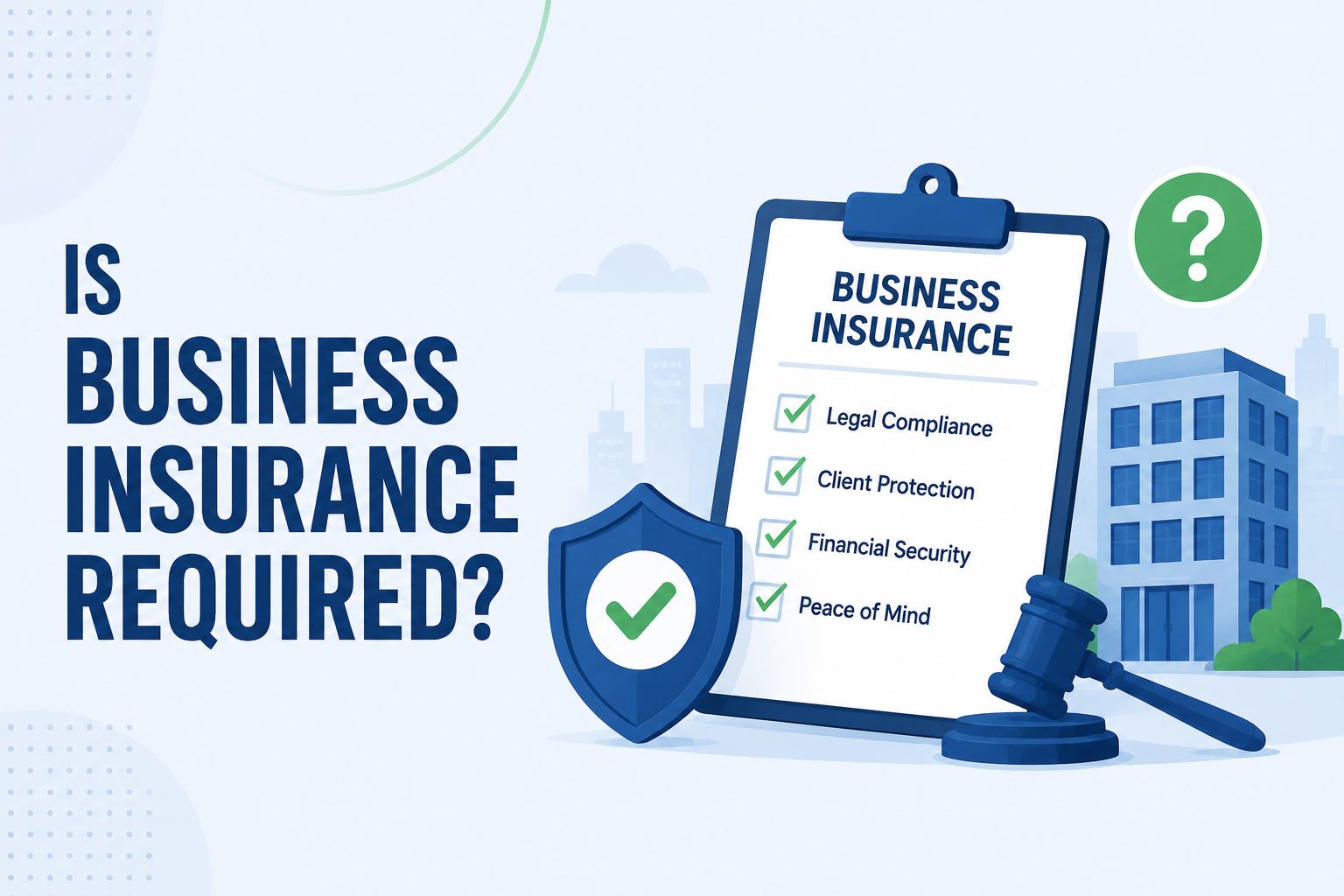
The word "general" is important here. This policy covers a broad range of everyday business risks rather than a narrow specialty risk. A customer slipping in your store, a delivery causing accidental damage to a client's property, or a competitor claiming your ad copy defamed their business all fall under general liability, which is exactly why it is so widely required by landlords and clients even when the law does not mandate it. For more on when it is legally required versus practically necessary, see is business insurance required.
How General Liability Insurance Works
The mechanism works the same way most insurance does. You pay a premium to keep the policy active, and if a covered incident occurs, you file a claim and the insurer pays out up to your policy limit, after any deductible is applied. What sets general liability apart is who the claim protects you against. This is third party coverage, meaning it responds to claims made by people outside your business, such as customers, clients, or members of the public, rather than claims involving your own employees or your own property.
That distinction matters more than most business owners realize when they are first buying coverage. A general liability policy will not pay out if an employee is injured on the job, since that falls under workers' compensation, and it will not pay to repair your own damaged equipment, since that falls under commercial property coverage or a Business Owner's Policy. General liability specifically protects you against the financial fallout of harming someone else or their property, which is also why it pairs so naturally with other coverages rather than standing in for all of them.
Get An Estimate Of Business Insurance Cost
Estimate general liability and small business insurance costs based on your industry, business size, and coverage needs.
Rachel Morgan covers insurance coverage analysis at InsuranceBlip. Her work examines the gap between what policies promise and what they actually pay out, helping readers understand their coverage before they ever need to use it.
Covers medical costs and legal expenses if a customer or visitor is injured on your premises or because of your business operations, such as a customer slipping on a wet floor.
Property Damage
Covers the cost of repairing or replacing someone else's property that your business damages, such as a contractor accidentally damaging a client's flooring during a job.
Advertising Injury
Covers claims of libel, slander, or copyright infringement arising from your business's advertising or marketing, even when the claim turns out to be unfounded.
Legal Defense Costs
Covers attorney fees and court costs for defending against a covered claim, even if the claim is ultimately dismissed, which can be a significant expense on its own.
For a full breakdown of how this fits alongside other coverages your business might carry, see what business insurance covers.
What General Liability Insurance Does Not Cover
General liability leaves several significant gaps that other policies are built specifically to fill.
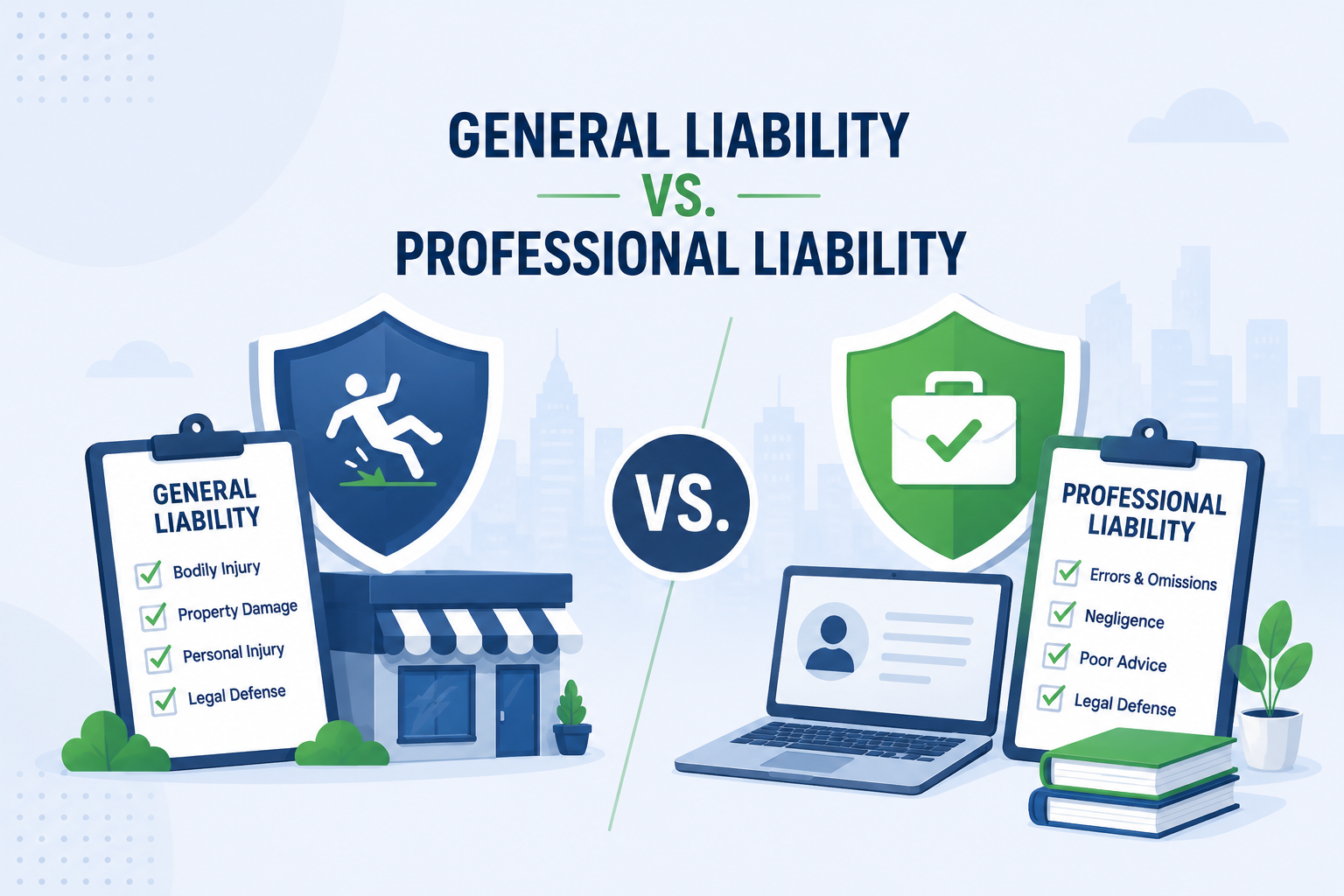
Professional errors or advice. If your work or advice causes a client financial harm rather than physical injury or property damage, that falls under professional liability, also known as errors and omissions insurance. See General Liability vs Professional Liability for a full comparison of the two.
Employee injuries. Injuries to your own employees are covered by workers' compensation, not general liability, regardless of how the injury occurred.
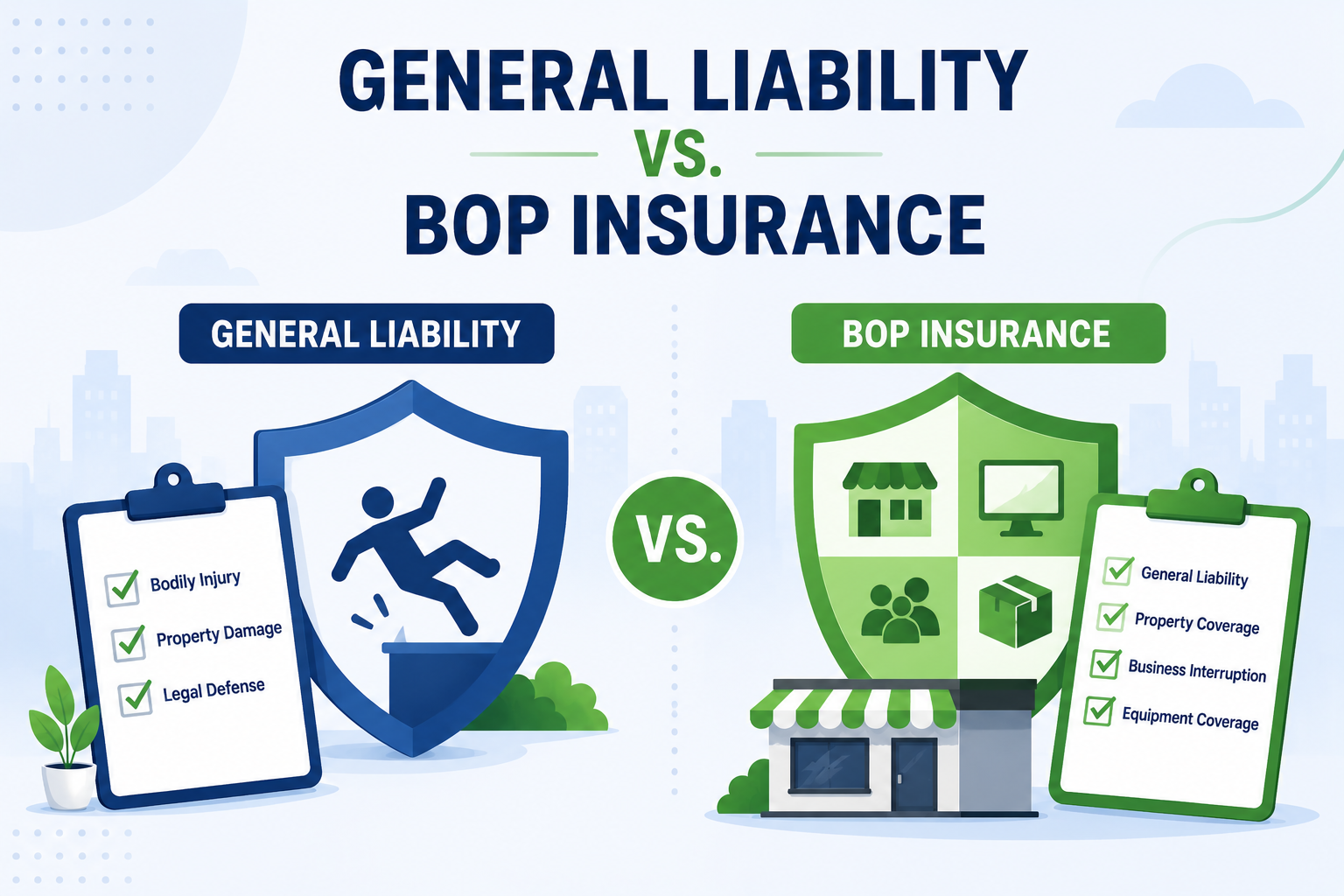
Damage to your own property or equipment. General liability only covers damage you cause to someone else's property. Protecting your own building, inventory, or equipment requires commercial property coverage, often bundled into a Business Owner's Policy. See General Liability vs BOP to understand when bundling makes sense.
Intentional acts or fraud. Deliberate harm or fraudulent conduct is excluded from every standard liability policy, not just general liability.
Business vehicle accidents. Vehicles used for business purposes need commercial auto insurance, since a personal auto policy and a general liability policy will both typically exclude business driving claims.
How Much Coverage Do You Need?
Most small businesses carry general liability limits of one million dollars per occurrence and two million dollars in aggregate for the policy period, which has become an informal industry standard partly because it is the minimum many landlords and client contracts require. Businesses with higher public exposure, such as those hosting events or working on other people's property regularly, sometimes carry higher limits or add an umbrella policy on top of their base coverage.
The right amount ultimately depends on your specific risk. A low foot traffic home based consulting business faces a very different exposure than a contractor working inside clients' homes every day, and coverage limits should reflect that difference rather than defaulting to whatever the minimum happens to be.
How Much Does General Liability Insurance Cost?
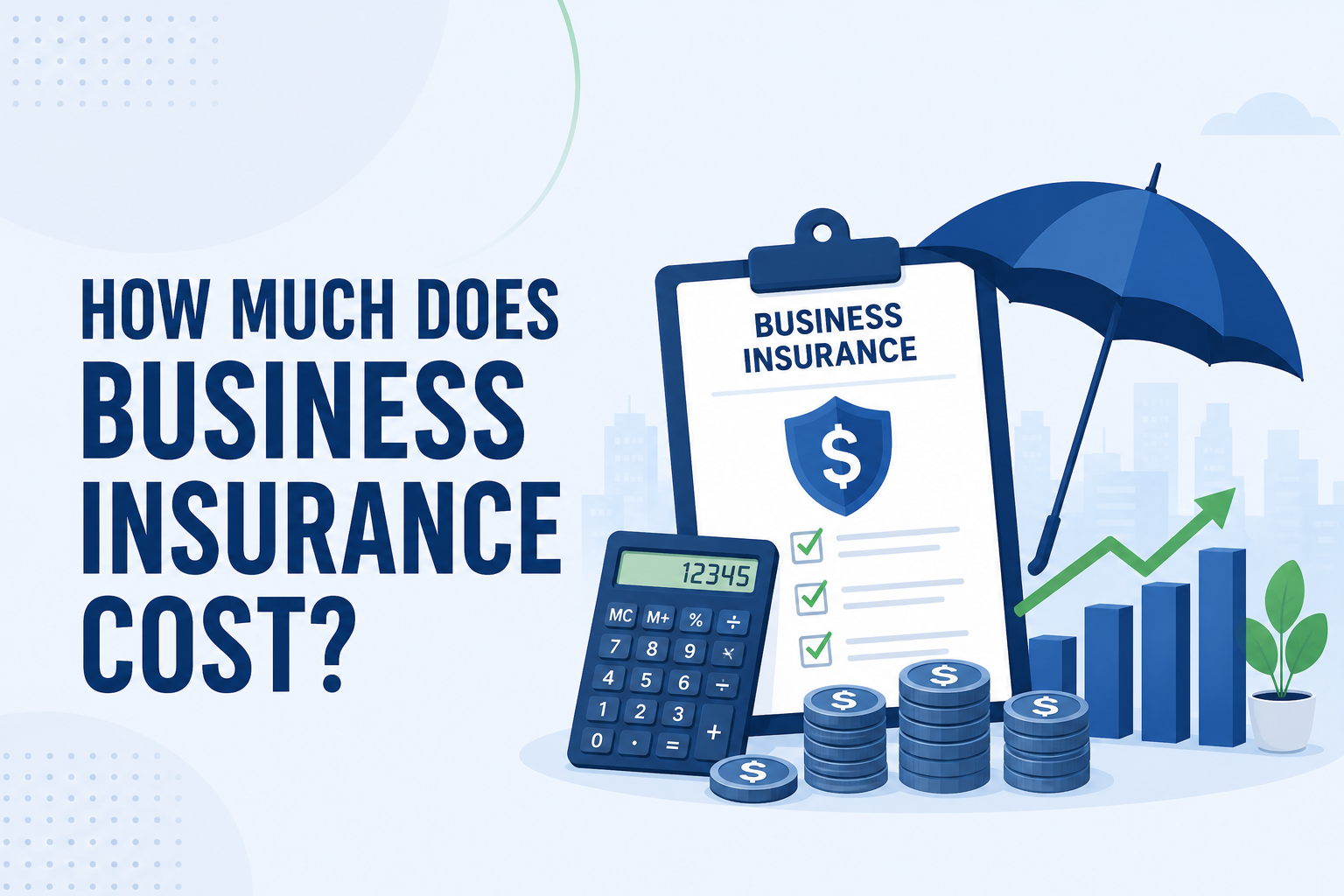
Most small businesses pay between five hundred and one thousand five hundred dollars a year for a standalone general liability policy, though the exact number depends heavily on industry, revenue, and claims history. For a full breakdown of what drives this cost up or down, including how it compares across different business types, see how much business insurance costs, or get a specific estimate with our Business Insurance Calculator.
General liability policies are available through most commercial insurance carriers, independent insurance agents, and increasingly through online business insurance platforms that allow you to compare quotes directly. Many businesses find it easiest to start with an independent agent who can compare multiple carriers at once, since pricing and coverage details can vary meaningfully between insurers for the same business.
How much is general liability insurance for a small business?
Most small businesses pay between five hundred and one thousand five hundred dollars a year, with low risk service businesses such as consultants and freelancers typically paying toward the lower end and businesses with more customer contact or physical risk paying closer to the upper end. Industry, revenue, and location all factor into the specific number.
Do I need general liability if I work from home?
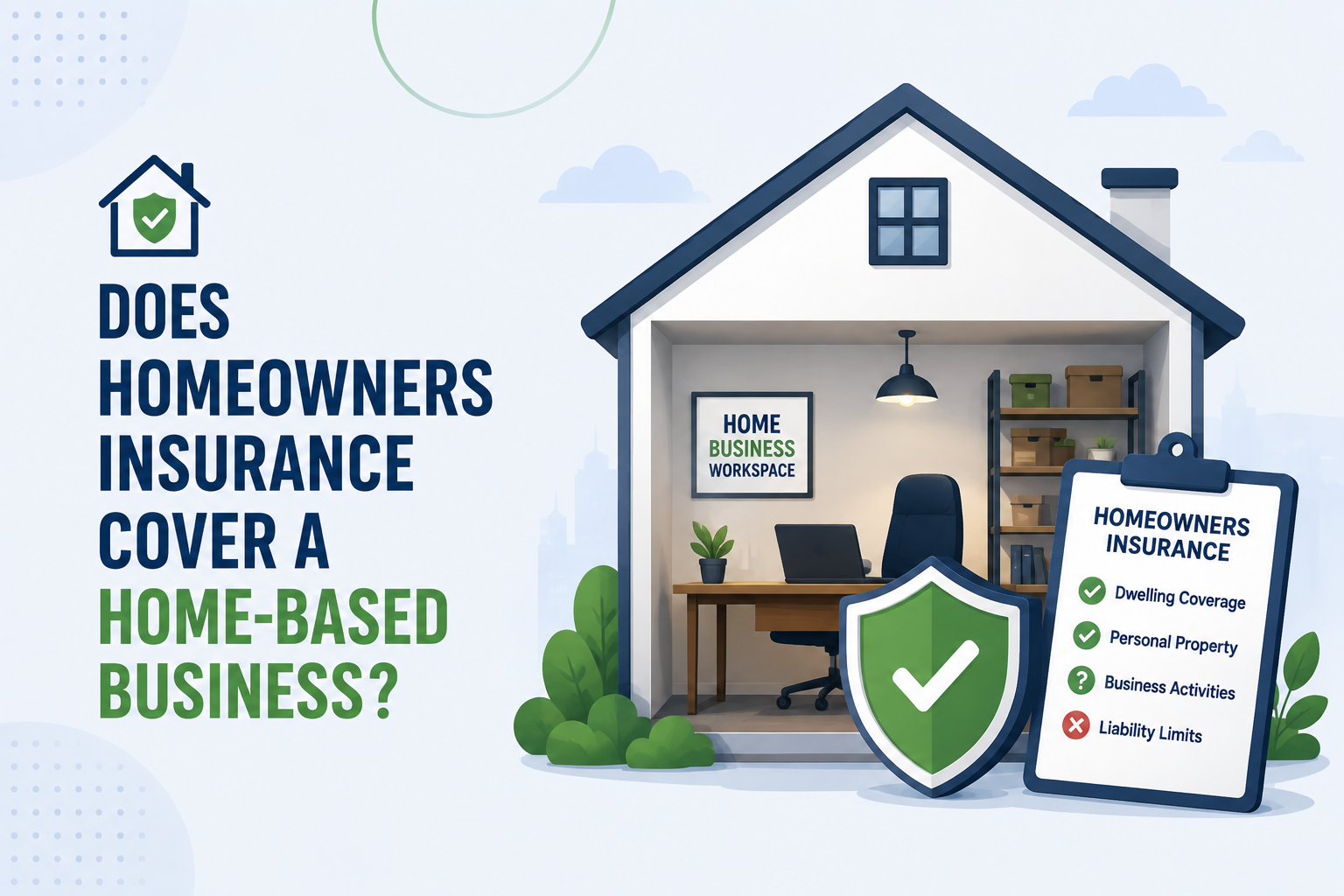
Often yes, even without a storefront or regular client visits. If you meet clients at home, ship physical products, or could plausibly be blamed for property damage or injury connected to your work, general liability still applies. Many home based business owners also discover that their homeowners policy specifically excludes business related claims, which is worth confirming directly rather than assuming personal coverage extends to business activity.
A Broad Policy With Real Limits
General liability insurance covers a genuinely wide range of everyday business risks, which is exactly why it is the most commonly required policy across leases, contracts, and licensing requirements. It is not, however, a complete safety net on its own. Understanding what it excludes, particularly professional errors, employee injuries, and damage to your own property, is what allows you to build a complete coverage picture instead of assuming one policy handles everything.
Use our free tools to estimate insurance costs before you shop. No personal information required just straight forward estimates.
Auto Insurance Calculator
Estimate your car insurance costs based on your age range, driving history, vehicle type, coverage level, & location. Understand how each factor affects your premium.
Life Insurance Needs Calculator
Calculate how much life insurance coverage your family might need based on your income, debts, and financial goals.
Health Insurance Estimator
Understand how premiums, deductible, out-of-pocket costs vary across different plans. Useful for comparing coverage options during enrollment or life change.
Business Insurance Estimator
Estimate general liability and small business insurance costs based on your industry, business size, and coverage needs.
Homeowners Insurance Calculator
Estimate how much homeowners insurance might cost based on your property value, location, and coverage needs.
Travel Insurance Calculator
Estimate trip protection costs based on your destination, trip duration, and the type of coverage you need.