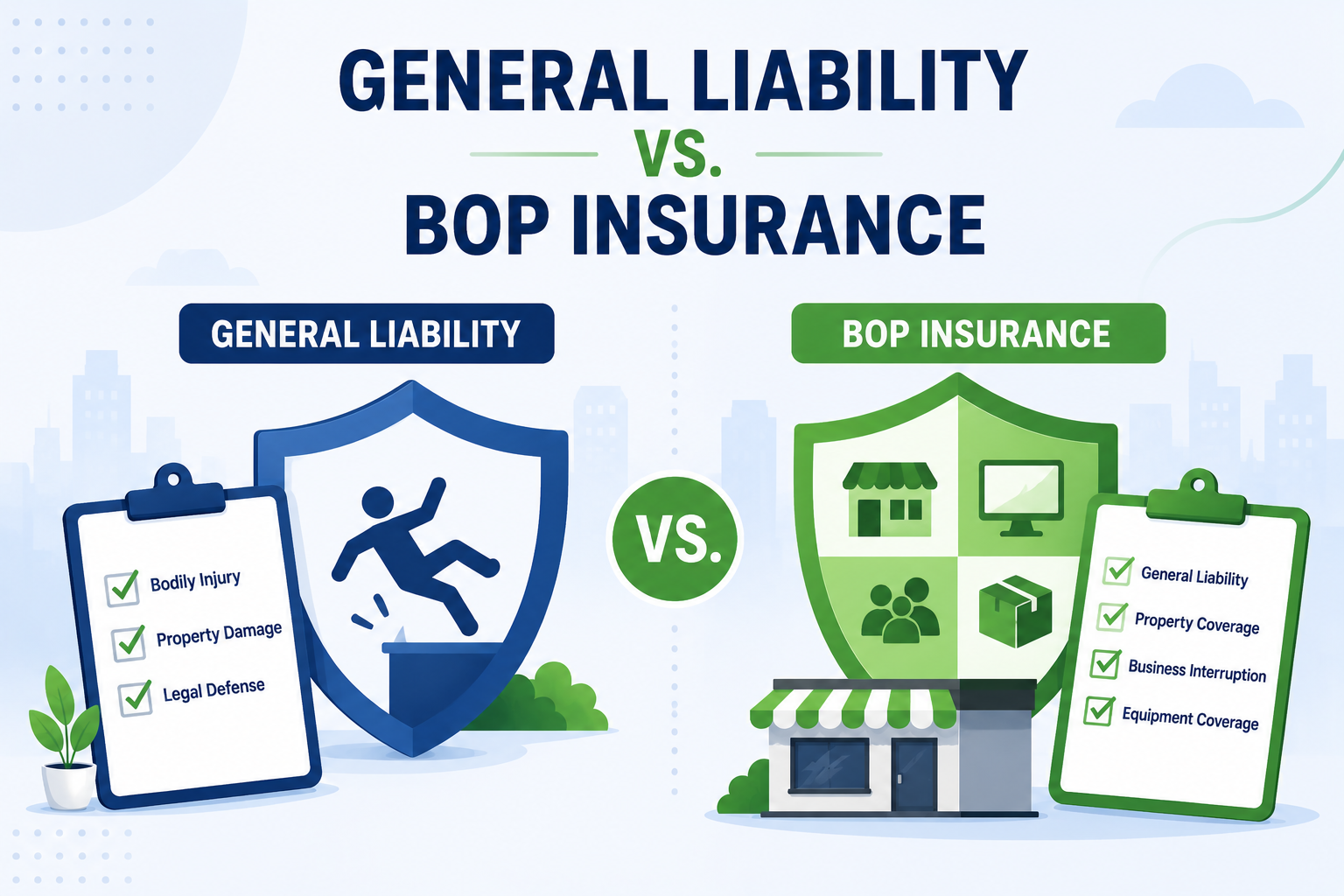
General liability covers physical injury and property damage claims from customers, clients, or the public. Professional liability, also called errors and omissions insurance, covers financial harm caused by mistakes, negligence, or failures in the professional services or advice you provide. They protect against entirely different kinds of claims, which is why most service based businesses end up carrying both rather than choosing between them.
What General Liability Covers
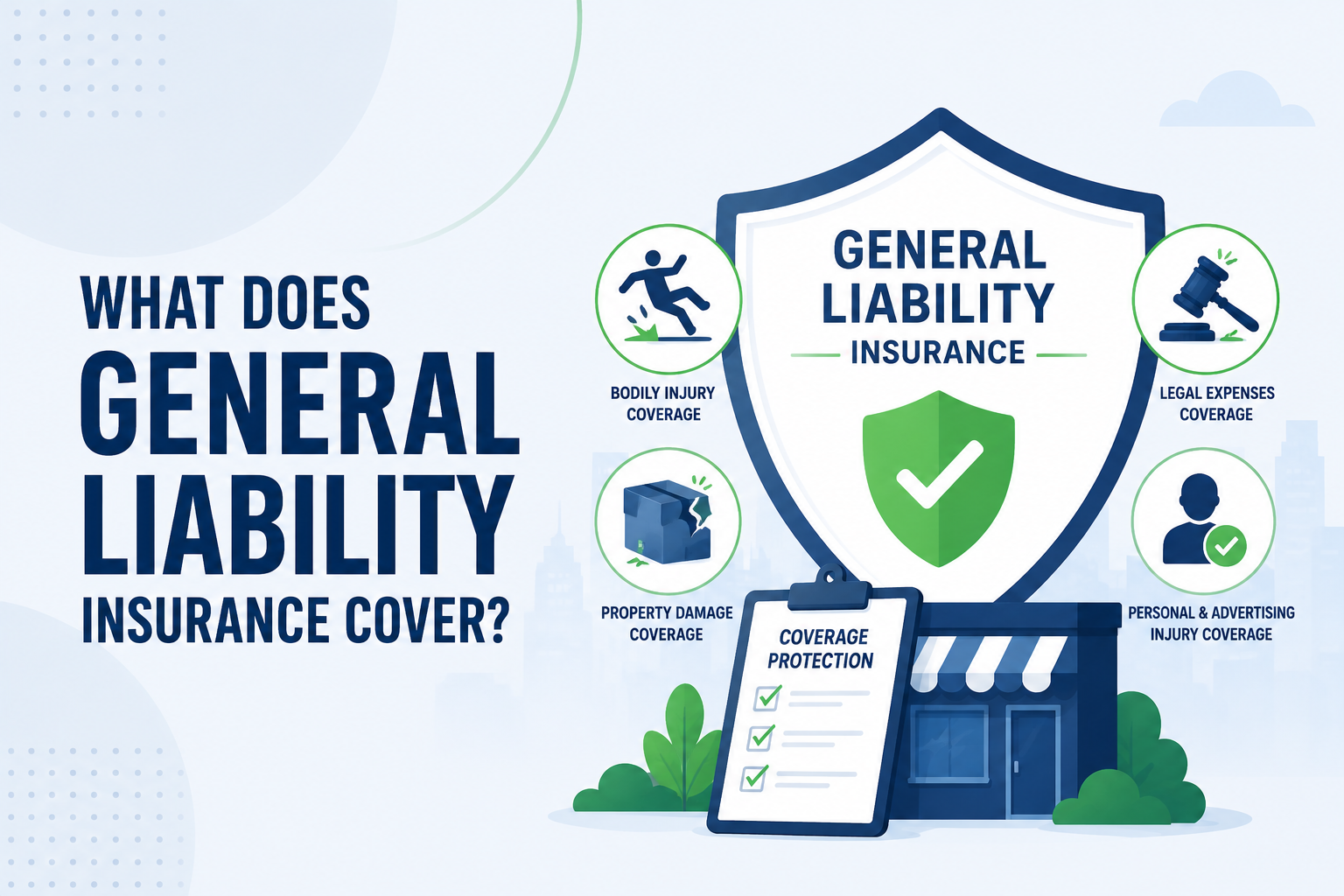
General liability protects against the everyday physical risks of running a business: a customer injured on your premises, property damage your business causes to someone else, and certain advertising related claims like defamation or copyright disputes. It also covers your legal defense costs if a covered claim leads to a lawsuit, even one that is eventually dismissed.
This is the policy most businesses buy first, since it applies broadly regardless of industry. For a full breakdown of what it covers and does not cover, see what general liability insurance covers.
What Professional Liability (E&O) Covers
Professional liability, often shortened to E&O, covers claims that your professional advice, services, or work caused a client financial harm, rather than physical injury or property damage. An accountant who makes an error on a client's tax filing, a consultant whose recommendation leads to a financial loss, or a designer who misses a critical deadline specified in a contract can all trigger a professional liability claim, even when no one was physically hurt and nothing was damaged.
This distinction matters because general liability simply does not respond to these situations. A client claiming your advice cost them money is a completely different category of risk than a client claiming you damaged their office, and insurers price and structure the two coverages separately for exactly that reason.
Table of Contents
Emily Foster
Insurance Policy Analyst
Emily Foster writes insurance comparison content at InsuranceBlip. Her work explains costly decisions like minimum versus full coverage and term versus whole life, helping readers choose coverage based on their situation rather than guesswork.
Financial harm from professional errors, advice, or missed obligations
Typical claim example
Customer slips and falls in your store
Client claims your advice caused a financial loss
Who typically needs it
Almost every business
Consultants, accountants, designers, IT firms, and other advice or service based businesses
Typical annual cost
$500 to $1,500
$500 to $3,000, depending on the profession and risk exposure
Required by
Landlords, many client contracts
Certain professional licensing boards, many client contractsCertain professional licensing boards, many client contracts
Real-World Claim Scenarios
Seeing how each policy actually responds to a real claim makes the difference easier to hold onto than the table alone.
A general liability scenario. A contractor is on a client's roof making repairs when a ladder slips and cracks several tiles below. The client demands the roof be repaired at the contractor's expense. This is property damage caused during business operations, exactly the kind of claim general liability exists to cover. The policy pays for the repair, and if the client pursues a lawsuit instead of accepting a settlement, it also covers the legal defense costs.
A professional liability scenario. A marketing consultant recommends a client shift their entire ad budget to a new platform, and the campaign performs far worse than projected, costing the client a significant amount of lost revenue. No one was physically hurt and nothing was damaged, but the client argues the consultant's advice was negligent and demands compensation. General liability would not respond to this claim at all, since there is no bodily injury or property damage involved. Professional liability is built specifically for this situation, covering both the potential settlement and the cost of defending the claim.
The pattern worth noticing is that the general liability scenario involves something physical going wrong, while the professional liability scenario involves the work itself being the problem. That distinction is the entire basis for why the two policies exist separately rather than as one combined coverage.
Do You Need Both?
For most service based businesses, the honest answer is yes. General liability handles the physical and reputational risks that come with simply operating a business, while professional liability handles the financial risk tied specifically to the quality or accuracy of your work. A consulting firm that only carries general liability has no protection at all if a client sues over bad advice, and a firm that only carries professional liability has no protection if a client is injured during an in-person meeting at their office.
Businesses with no advisory or service component, such as a retail shop that only sells physical products, often find general liability alone is sufficient, since there is no professional advice being given that could trigger an E&O claim. The deciding factor is not company size or revenue but whether your work product could plausibly be blamed for a client's financial loss.
Get An Estimate Of Business Insurance Cost
Estimate general liability and small business insurance costs based on your industry, business size, and coverage needs.
No. Businesses that do not provide advice, services, or specialized expertise as their core offering, such as most retail and product based businesses, typically do not need it. Any business where a client could reasonably claim your work, advice, or judgment caused them financial harm should seriously consider it, even if the business is small.
Can one policy cover both?
Not typically as a single unified policy, though some insurers offer package deals that bundle the two together at a combined rate. More commonly, businesses purchase general liability and professional liability as two separate policies, sometimes alongside a Business Owner’s Policy for a more complete package. See General Liability vs BOP for how that bundling option works.
Which is cheaper?
General liability is usually the less expensive of the two for a comparable small business, typically running five hundred to one thousand five hundred dollars a year. Professional liability costs vary more widely, from around five hundred to three thousand dollars a year, since pricing depends heavily on the specific profession and how much financial exposure a single error could create.
Different Policies for Different Risks
General liability and professional liability are not competing options where you pick the better one. They cover distinct categories of risk, and for any business that gives advice, performs specialized services, or could be blamed for a client's financial loss, carrying both is the standard, not the exception. Understanding the difference now means you are not discovering a coverage gap the moment a claim actually happens.
Use our free tools to estimate insurance costs before you shop. No personal information required just straight forward estimates.
Auto Insurance Calculator
Estimate your car insurance costs based on your age range, driving history, vehicle type, coverage level, & location. Understand how each factor affects your premium.
Life Insurance Needs Calculator
Calculate how much life insurance coverage your family might need based on your income, debts, and financial goals.
Health Insurance Estimator
Understand how premiums, deductible, out-of-pocket costs vary across different plans. Useful for comparing coverage options during enrollment or life change.
Business Insurance Estimator
Estimate general liability and small business insurance costs based on your industry, business size, and coverage needs.
Homeowners Insurance Calculator
Estimate how much homeowners insurance might cost based on your property value, location, and coverage needs.
Travel Insurance Calculator
Estimate trip protection costs based on your destination, trip duration, and the type of coverage you need.