Menu
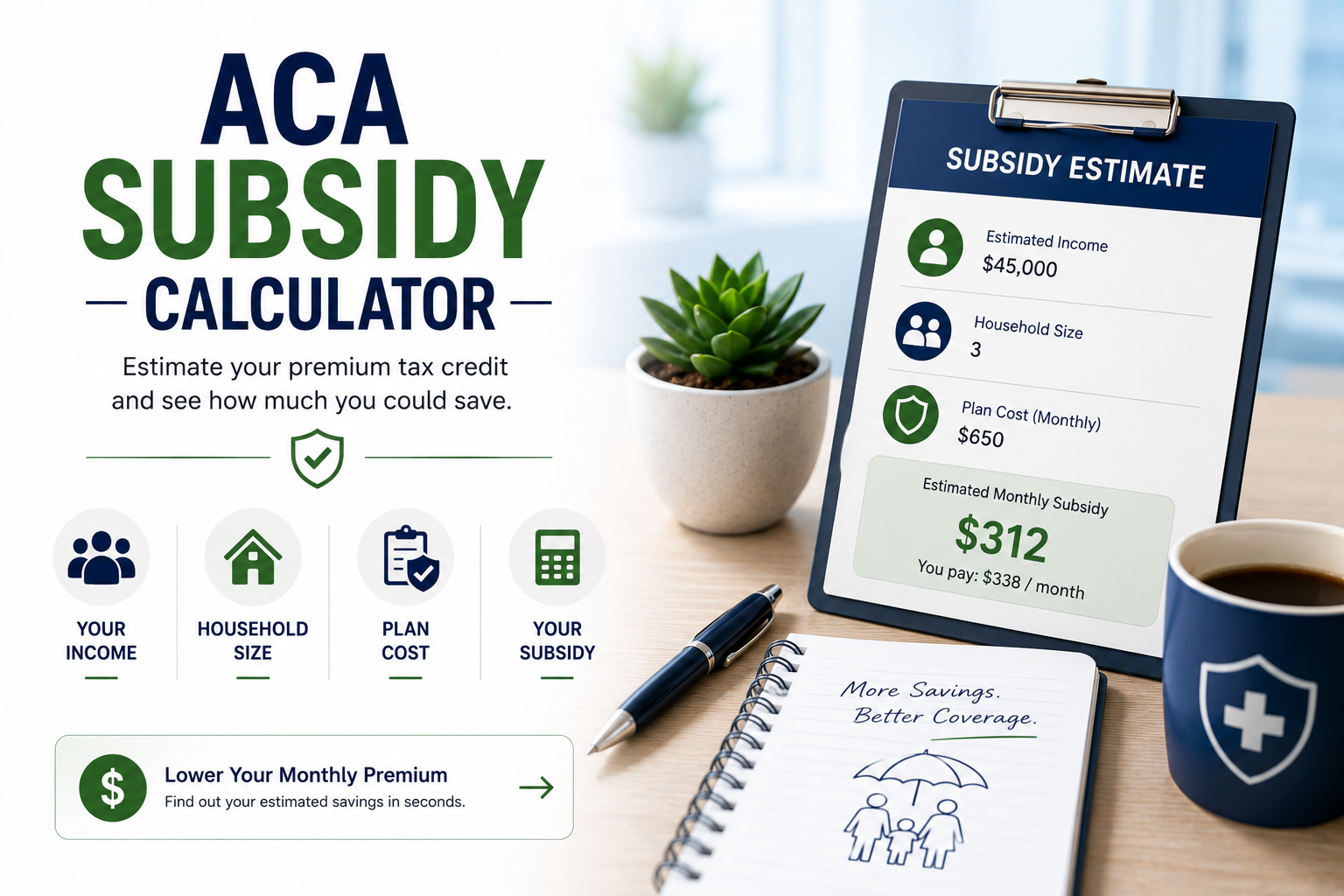
See how much premium assistance you likely qualify for based on your household income and size.
Estimate your potential ACA Marketplace subsidy using federal poverty guideline calculations. No personal information required.
How
This tool estimates your ACA premium tax credit by comparing your household income against the federal poverty line for your household size, then calculating what you'd be expected to contribute toward the benchmark Silver plan in your area.
The subsidy, formally called the premium tax credit, caps what your household is expected to pay toward that benchmark plan at a percentage of income. The government covers the difference between your expected contribution and the benchmark plan's actual cost.
Since benchmark Silver plan costs vary meaningfully by state and even by county, this tool uses your state of residence to apply a realistic cost range rather than a single national assumption.
The calculator does not require personal information and does not enroll you in coverage.
Factors
The federal poverty line itself is calculated per household size, so the same income can produce very different subsidy eligibility depending on how many people it supports.
Benchmark Silver plan costs vary by state and by county within a state, which directly affects your expected contribution and therefore your subsidy amount, even at identical income levels.
This is the primary factor. Lower income relative to household size generally means a larger subsidy, with households near or below 150 percent of the federal poverty line often qualifying for the largest assistance.
If your employer offers coverage considered affordable and meeting minimum value standards under ACA rules, you generally aren't eligible for a marketplace subsidy, regardless of income.
In states that expanded Medicaid eligibility, very low income households may qualify for Medicaid instead of a marketplace subsidy, which follows different rules and typically means no premium cost at all rather than a partial subsidy.
Why
Benchmark plan costs shift somewhat by county even within the same state, and marketplace pricing updates annually. For this reason, the tool provides an estimated range rather than a single guaranteed dollar figure.
Use this estimate to understand roughly what assistance you're likely to qualify for before starting marketplace enrollment, where your exact subsidy will be confirmed.
Using this check before enrolling helps you compare plan tiers with a realistic post-subsidy budget in mind, rather than being surprised by the difference between a plan’s sticker price and what you’ll actually owe.
Related Tools
Explore some of our featured tools related to health insurance
Find the right deductible level based on your expected healthcare usage and savings. Understand how raising your deductible affects your monthly premium.
Compare HMO, PPO, and EPO plans side by side on cost, coverage, and flexibility — so you can choose the right plan type for your situation.
Get a personalised monthly premium estimate based on your age, state, plan tier, household size, income, and tobacco status. Results in seconds.
Health Insurance Special
The table below illustrates how expected contribution toward the benchmark Silver plan typically changes as income rises relative to the federal poverty line.
| Income as % of Federal Poverty Line | Expected Contribution Toward Benchmark Plan | Typical Subsidy Impact |
|---|---|---|
| Up to 150% | 0% | Benchmark Silver plan often available at no premium cost |
| 150%–200% | 0%–2% | Substantial subsidy, benchmark plan remains low cost |
| 200%–300% | 2%–6% | Meaningful subsidy, noticeable reduction from full premium |
| 300%–400% | 6%–8.5% | Smaller subsidy, still reduces cost versus full premium |
| Above 400% | 8.5% (capped) | Subsidy still available if the benchmark plan would otherwise exceed 8.5% of income |
Note: These figures reflect standard federal poverty line calculation bands. Your specific subsidy is confirmed during actual marketplace enrollment.
This tool uses the same federal poverty line and benchmark plan methodology the marketplace itself uses, so results are generally directionally accurate. Your exact subsidy is confirmed during enrollment, since it depends on the specific benchmark plan available in your county, which can shift year to year.

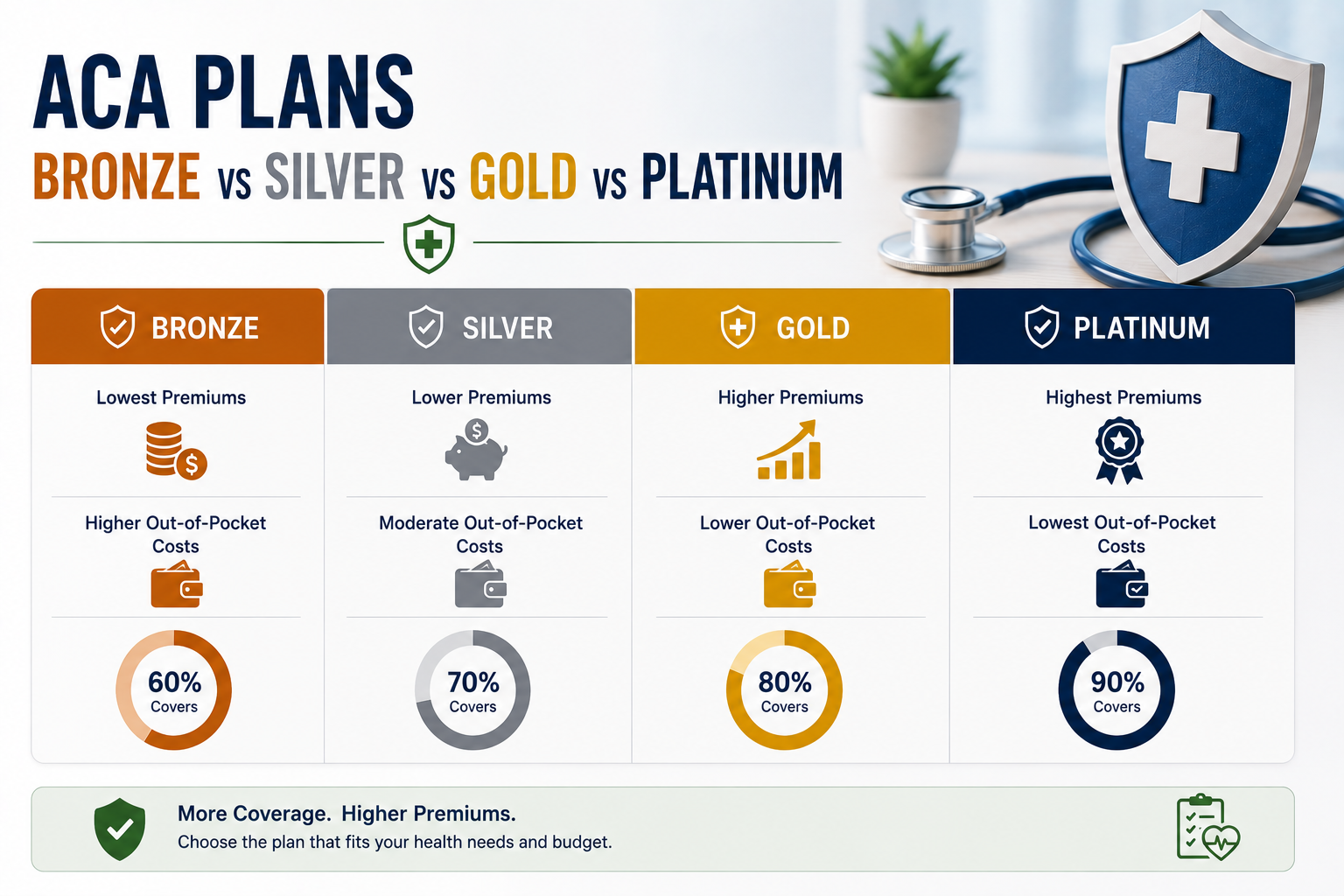
No. Your subsidy amount is calculated against the benchmark Silver plan regardless of which tier you actually select. If you choose a Bronze plan, which typically costs less than the benchmark, the same subsidy amount can cover a much larger share of that lower premium, sometimes reducing it close to zero.
Since the marketplace uses an income estimate to calculate your advance subsidy, a significant difference between your estimate and actual year end income gets reconciled at tax time. Underestimating income can mean repaying part of your subsidy, while overestimating can mean receiving an additional credit.
Generally not, if your employer’s coverage is considered affordable and meets minimum value standards. If employer coverage is offered but would cost more than a specific percentage of your income, you may still qualify for a marketplace subsidy instead.
Your subsidy is calculated based on your expected contribution compared to the actual cost of the benchmark Silver plan in your specific area. Since benchmark plan costs vary by state and county, two households with identical income can receive different subsidy amounts depending on where they live.
No. This tool estimates marketplace premium tax credits specifically. Households below certain income thresholds may qualify for Medicaid instead, particularly in states that expanded Medicaid eligibility, which is a separate program with different rules.
Related Guides
Looking for more in-depth answers? Explore our latest health insurance guides covering costs, coverage options, policy comparisons, and expert tips.
You may also find these tools helpful:
© 2026 InsuranceBlip. All rights reserved. Website created & managed by Infolytics.