Find the right homeowners policy form based on how you own your home and what you need covered.
Educational estimate
No signup required
Free tool
FREE • NO SIGNUP • EDUCATIONAL ESTIMATE
Homeowners Policy Form Comparison
Answer a few questions to see which policy form fits your situation, and compare estimated coverage differences.
✓ Educational estimate✓ No signup✓ No quotes
Recommended Policy Form
—
educational recommendation based on your selections
Educational recommendation
Estimated Cost Difference vs Standard$— / year
illustrative annual difference
Ownership Type—
selected property type
Coverage Preference—
selected protection level
Why:—
Important: This tool provides an educational recommendation only.
Actual policy availability and pricing depend on your insurer and specific home details,
including location, rebuilding cost, claims history, deductible, endorsements, and local risk factors.
How
How This Comparison Tool Works
This tool matches your home ownership type and coverage preferences to the policy form built for your situation, then estimates the typical cost difference between forms.
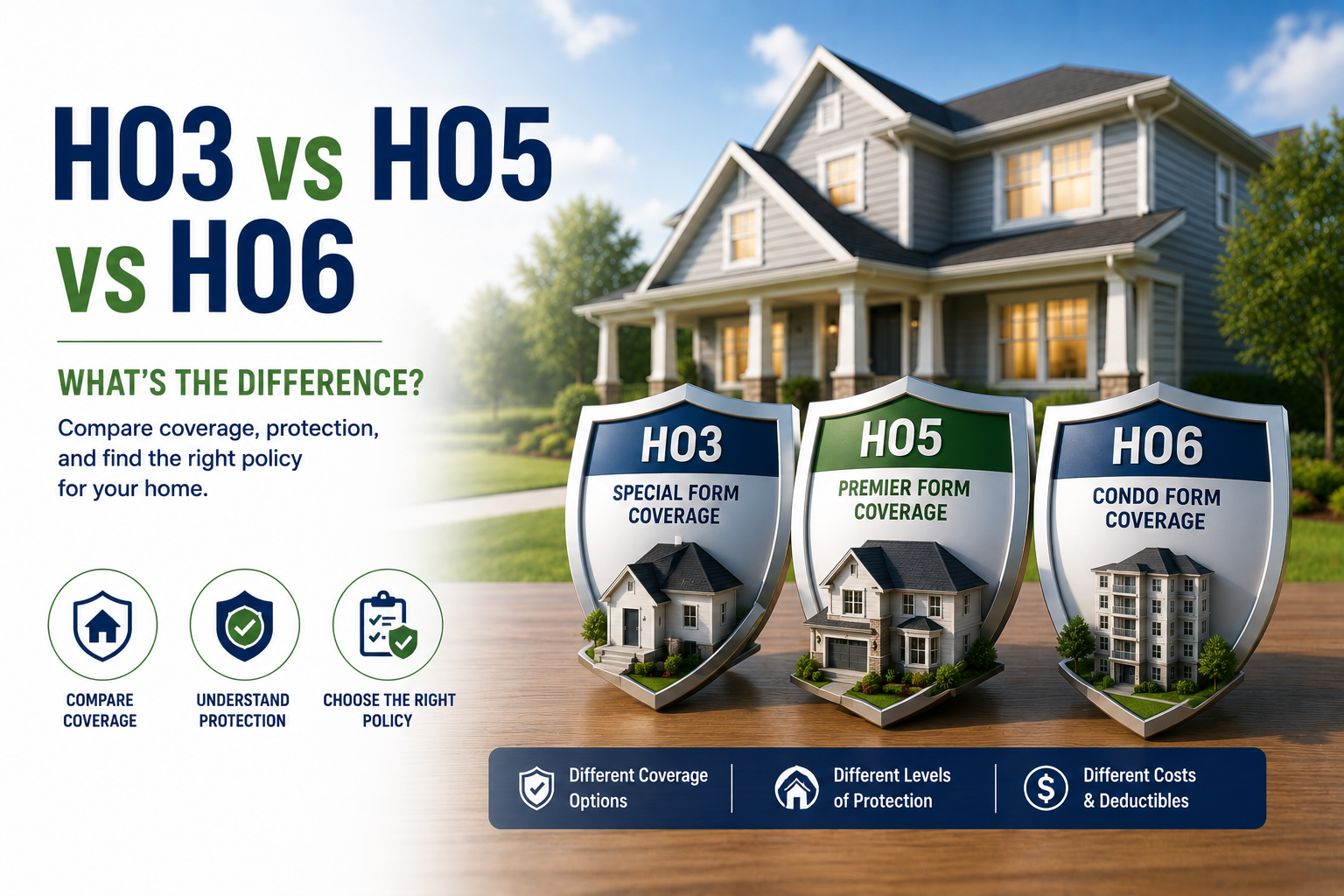
HO-3, HO-5, and HO-6 aren't quality tiers of the same policy, they're built for different situations. HO-3 and HO-5 apply to single-family homeowners, differing mainly in how broadly personal property is covered. HO-6 applies specifically to condo and co-op owners, who don't own the building structure itself.
The tool does not require personal information and does not generate a binding quote.
Factors
What Factors Determine Your Recommended Policy Form?
Home Value and Complexity
Higher value homes or homes with significant belongings sometimes favor HO-5's broader protection, since the potential gap HO-3's named peril limitation leaves matters more as the value at risk increases.
Insurer Availability
Not every insurer offers HO-5 for every home type or value range. Availability varies more than it does for HO-3, so confirming which forms a specific insurer actually offers is a real part of the decision, not just a preference exercise.
Ownership Type
This is the primary factor. Condo and co-op owners need HO-6 regardless of other preferences, since HO-3 and HO-5 are built to cover a structure you don't actually own. Single-family homeowners choose between HO-3 and HO-5.
Personal Property Coverage Basis
HO-3 covers personal belongings on a named peril basis, meaning only specifically listed causes of loss are covered. HO-5 covers belongings on a broader open peril basis, matching the same broader protection given to the dwelling itself.
Coverage Preference
Homeowners who want the simplest, most cost effective option that still meets typical needs generally fit HO-3. Homeowners who want the broadest available protection, particularly for higher value belongings, generally fit HO-5.
Why
Why This Tool Shows a Recommendation, Not a Guarantee
Insurer availability for HO-5 specifically varies more than HO-3, since some insurers only offer it for certain home types or values. This tool's recommendation reflects which form typically fits your situation, but actual availability should be confirmed with a specific insurer.
When
When This Tool Is Useful
When you're not sure whether you need HO-3, HO-5, or HO-6
When you own a condo and aren't sure why standard homeowners quotes don't apply to you
When deciding whether upgrading from HO-3 to HO-5 is worth the added cost
When comparing homeowners policy options before a purchase or renewal
Using this tool before requesting quotes helps you ask for the right policy form from the start, rather than discovering mid-quote that you’ve been comparing options that don’t actually apply to your situation.
Related Tools
The home insurance tool ecosystem
Explore our featured tools related to home insurance.
Home Premium Estimator
Get a personalised annual premium estimate based on your home's value, location, and coverage level
Rebuild Cost Estimator
Calculate your home's rebuild cost — the number that should set your dwelling coverage limit, not market value.
Natural Disaster Risk Checker
Check your home's exposure to flood, wildfire, hurricane, and earthquake risk — and understand what additional coverage you may need.
Typical Cost Difference by Policy Form
The table below illustrates typical annual cost differences between policy forms for a comparable single-family home.
HO-3
Typical Relative CostBaseline
Personal Property BasisNamed peril (listed causes only)
HO-5
Typical Relative Cost10%–20% higher
Personal Property BasisOpen peril (broader default protection)
HO-6 (condo/co-op)
Typical Relative CostGenerally lower, covers less
Personal Property BasisNamed peril, typically
Note: These figures illustrate typical relative differences. Actual premiums depend on your specific home, location, insurer, and coverage limits.
Frequently Asked Questions
I own a condo, why can't I just get HO-3 like everyone else recommends?
HO-3 is built to cover an entire structure you own outright, which doesn’t match a condo or co-op situation where the building itself is covered by the association’s master policy. HO-6 is specifically designed to cover what you’re actually responsible for: your unit’s interior, personal belongings, and liability.
Is HO-5 always worth the extra cost over HO-3?
Not necessarily. The extra cost buys broader personal property protection, which matters more if you have higher value belongings or simply want the broadest protection available without evaluating specific named perils. For lower value belongings, the gap HO-3 leaves open rarely becomes a real problem.
Can I switch from HO-3 to HO-5 later?
In most cases yes, many insurers allow this upgrade at renewal, since it mainly extends personal property to broader coverage rather than requiring an entirely different underwriting process.
Does my condo association's master policy cover everything, so do I even need HO-6?
No. Master policies typically cover the building’s shared structure and common areas, not your unit’s interior, personal belongings, or your personal liability. HO-6 fills exactly that gap, and skipping it leaves those specific areas uninsured.
What if I'm not sure how much my personal property is worth?
A rough estimate is fine for this tool’s recommendation. For an accurate figure, a room by room inventory of your belongings, including approximate replacement cost, gives a much more precise picture when actually setting your coverage limit with an insurer.
Does this tool account for replacement cost versus actual cash value?
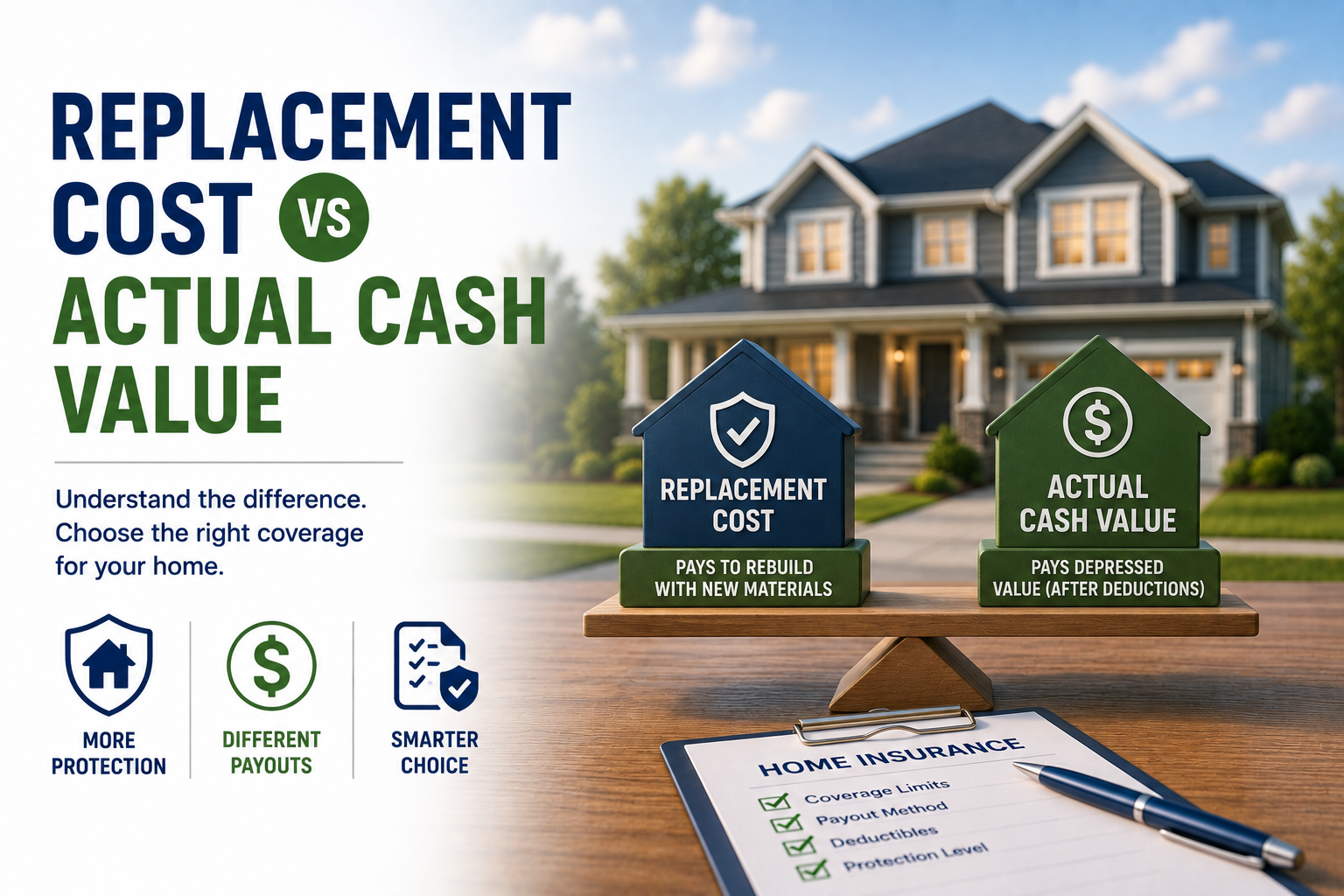
This tool focuses on policy form selection specifically. Replacement cost versus actual cash value is a separate decision that applies within whichever form you choose, and it significantly affects what a claim actually pays out.
Related Guides
Continue Learning About Home Insurance
Looking for more in-depth answers? Explore our latest home insurance guides covering costs, coverage options, policy comparisons, and expert tips.
Stop guessing your monthly rates. Input your vehicle type, driving history, desired coverage limits to receive an instant estimate of your auto insurance costs & find ways to save on your policy.
Find out exactly how much coverage your family needs to stay protected. This tool analyzes your debts, income, and future goals to provide a personalized insurance target in minutes.
Secure your company's future with the right coverage. Quickly calculate estimated costs for general liability, property, and worker’s compensation based on your industry and team size.
Get a clear picture of your potential healthcare costs. Use this estimator to compare plan types & see how different deductibles & coverage levels impact your monthly premium.
Quickly estimate costs for medical emergencies, cancellations, and lost luggage based on your destination and duration. Get the coverage you need to travel with total peace of mind.