Menu
Real Numbers by Plan Tier, Age, and Subsidy
Before any subsidy, ACA marketplace premiums for a forty year old individual typically range from around three hundred to over six hundred dollars a month depending on the plan tier selected. This figure changes substantially once income-based subsidies are factored in, since many marketplace enrollees qualify for meaningful premium assistance that can cut the out-of-pocket cost significantly. For the broader picture of how health insurance works overall, see what is health insurance.
Unlike auto or home insurance, where cost is driven mainly by personal risk factors or property value, health insurance pricing is shaped by a smaller, more regulated set of factors under ACA rules: your age, your location, whether you use tobacco, your household size, and the plan tier you choose, with income-based subsidies then applied on top of that base premium.
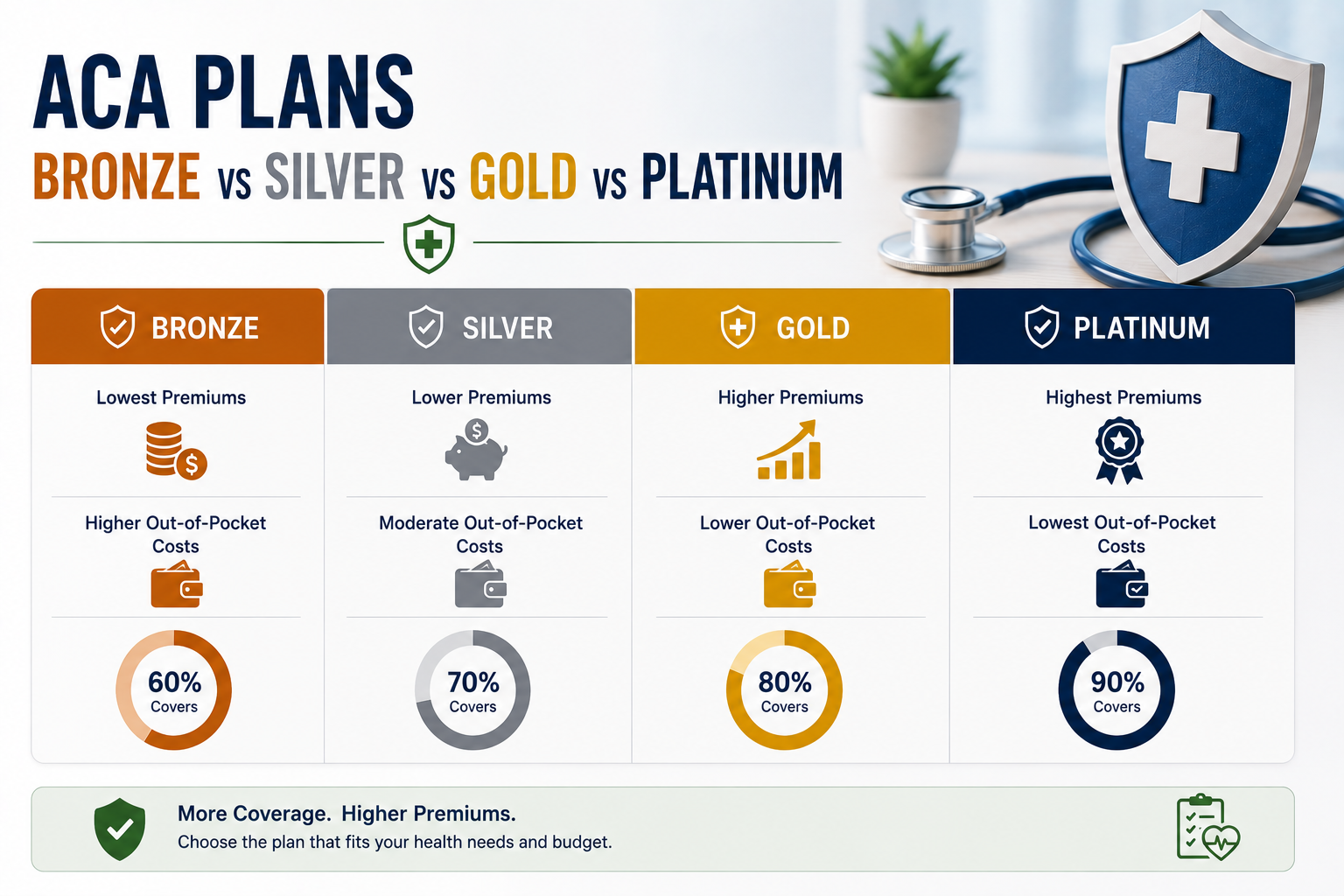
| Plan Tier | Avg. Monthly Premium | Deductible | Plan Pays After Deductible |
|---|---|---|---|
| Bronze | $310 | $5,700 – $7,200 | 60% |
| Silver | $443 | $3,500 – $5,500 | 70% |
| Gold | $540 | $1,500 – $1,800 | 80% |
| Platinum | $675 | $0 – $500 | 90% |
Choosing a tier is fundamentally a tradeoff between monthly premium and out-of-pocket cost when you actually use care. Bronze plans minimize the monthly cost but expose you to significantly more spending if you need substantial medical care during the year, while Platinum plans do the opposite, costing more monthly but sharing costs more generously once you seek care. For the fuller comparison of which tier fits which situation, see Bronze vs Silver vs Gold vs Platinum plans compared.
Table of Contents
Federal ACA rules cap the maximum age-based premium difference at a three to one ratio between the oldest and youngest enrollees, which is why costs rise steadily rather than sharply at any single age threshold, unlike some other insurance types where a specific birthday can trigger a sudden rate change.
Several specific factors, tightly regulated under ACA rules, determine what you actually pay before any subsidy is applied.
The single most impactful step for many marketplace shoppers is checking subsidy eligibility before assuming the full premium applies to you, since a meaningful share of marketplace enrollees qualify for some level of assistance based on household income. Our ACA subsidy calculator can help estimate what you might actually qualify for before you commit to a specific plan.
Beyond subsidies, checking whether employer-sponsored coverage is available to you first is worth doing, since employer plans often cost less out of pocket than an individual marketplace plan due to the employer covering part of the premium. Choosing a plan tier that matches your actual expected healthcare usage, rather than defaulting to the cheapest premium, can also reduce your total annual cost once out-of-pocket spending is factored in alongside the premium itself.
See your estimated premium after accounting for your age, location, household income, and plan tier.
Yes, significantly, for marketplace plans specifically. Your household income relative to the federal poverty line determines your eligibility for premium subsidies, which can reduce your actual monthly cost well below the sticker price shown on a plan listing. Employer-sponsored insurance generally does not factor in income the same way, since the employer typically sets a fixed contribution regardless of an individual employee’s income level.
Often, yes, since employers typically cover a meaningful share of the premium as part of the overall compensation package, reducing what the employee pays out of pocket compared to purchasing an equivalent individual marketplace plan without a subsidy. This is not universal, however, and some marketplace plans with a strong subsidy can end up costing less than an employer plan with a lower employer contribution.
Yes. Self-employed individuals purchasing coverage through the ACA marketplace are eligible for the same income-based subsidies as any other marketplace enrollee, based on household income relative to the federal poverty line. This makes the marketplace, rather than an unsubsidized individual plan purchased directly from an insurer, generally the better starting point for most self-employed individuals shopping for coverage.
Health insurance cost is shaped by a specific, regulated set of factors, age, location, tobacco use, and plan tier, but the number that actually matters for most marketplace shoppers is the post-subsidy premium, not the sticker price alone. Checking subsidy eligibility before comparing plans is the single step most likely to change your actual out-of-pocket cost. Visit our Health Insurance hub for the fuller picture of how to choose the right plan.
Get a personalized estimate based on your age, income, and plan tier.
Try Health Insurance CalculatorExplore Insurance GuidesAt A Galance
Use our free tools to estimate insurance costs before you shop. No personal information required just straight forward estimates.
Estimate your car insurance costs based on your age range, driving history, vehicle type, coverage level, & location. Understand how each factor affects your premium.
Calculate how much life insurance coverage your family might need based on your income, debts, and financial goals.
Understand how premiums, deductible, out-of-pocket costs vary across different plans. Useful for comparing coverage options during enrollment or life change.
Estimate general liability and small business insurance costs based on your industry, business size, and coverage needs.
Estimate how much homeowners insurance might cost based on your property value, location, and coverage needs.
Estimate trip protection costs based on your destination, trip duration, and the type of coverage you need.
© 2026 InsuranceBlip. All rights reserved. Website created & managed by Infolytics.