Menu
Real Numbers by Trip Type and Coverage Level
Most travel insurance policies cost between four and eight percent of your total trip cost, meaning a five thousand dollar trip typically costs between two hundred and four hundred dollars to insure. Unlike some insurance types priced primarily off personal risk factors, travel insurance pricing is driven mostly by your trip cost, destination, trip length, and the coverage level you choose. If you have not yet decided whether coverage makes sense for your specific trip, see is travel insurance worth it before working through the specific numbers below.
The percentage based pricing model means the dollar cost of insurance scales directly with what you have at risk, which is part of why the value proposition tends to strengthen as trip cost rises rather than staying constant across every budget.
| Coverage Level | Typical Cost (% of Trip Cost) | What's Included |
|---|---|---|
| Basic | 4% – 5% | Trip cancellation, emergency medical, baggage loss |
| Standard | 5% – 6% | Basic coverage plus trip interruption and delay benefits |
| Comprehensive | 6% – 8% | Standard coverage plus higher medical limits and evacuation coverage |
| Cancel For Any Reason (CFAR) | 8% – 12% | Comprehensive coverage plus the ability to cancel for reasons outside the standard covered list |
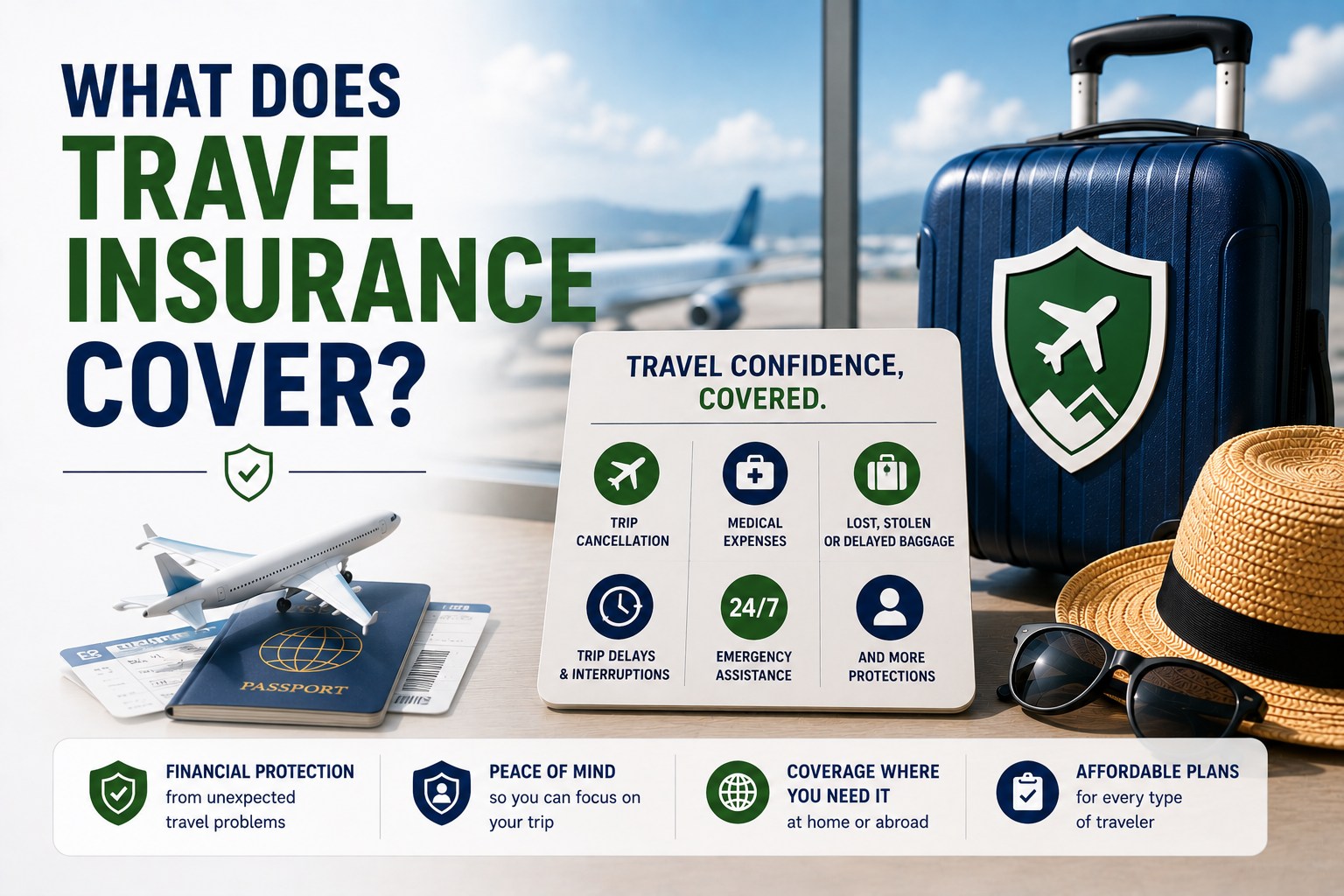
For the full breakdown of what each of these levels actually includes coverage by coverage, see what does travel insurance cover.
Table of Contents
Travel insurance typically costs between four and eight percent of your total trip cost, which makes the decision easier to frame as a direct comparison between that cost and what you would actually lose without it.
These figures are illustrative national ranges. Your actual cost depends on your specific trip cost, destination, traveler age, and selected coverage level.
Insurers evaluate several specific factors when pricing a travel insurance policy, and understanding them explains why two trips of similar length can carry different premiums.
Several practical steps can reduce your premium without leaving meaningful gaps in your coverage. Purchasing a policy earlier in the trip planning process sometimes unlocks better pricing or eligibility for certain benefits, such as pre existing condition waivers that typically require purchase within a specific window after your initial trip deposit. Choosing a basic or standard coverage level instead of comprehensive or CFAR coverage lowers cost directly, provided your trip's risk profile does not specifically call for the broader protection those higher tiers provide.
Frequent travelers should compare the cost of insuring each trip individually against an annual multi-trip policy, since travelers who take more than two or three trips a year often find an annual policy costs less in total than purchasing separate coverage each time. Comparing quotes across multiple insurers before purchasing is also worth doing, since pricing for comparable coverage can vary meaningfully between providers for the same trip.
These are national averages. Your actual cost depends on your specific trip cost, destination, age, and coverage choices.
Yes, meaningfully. Older travelers typically pay higher premiums, primarily due to the medical and evacuation components of a policy, since medical risk generally increases with age. Some insurers apply age based pricing tiers, with a noticeable cost increase once a traveler crosses certain age thresholds, commonly around ages sixty five and seventy.
Many travel insurance policies include a review period, often ten to fifteen days after purchase, during which you can cancel for a full refund provided you have not yet started your trip or filed a claim. After that review period, most policies are non refundable, making it worth reviewing the specific terms before purchasing rather than assuming a refund will be available later.
Travel insurance cost scales fairly predictably with your total trip cost and chosen coverage level, which makes budgeting for it relatively straightforward once you know your trip details. The more important decision is not the exact dollar amount but whether the coverage level you choose actually matches your trip's real risk, since the cheapest policy is not always the right one if it leaves a meaningful gap. Visit our Travel Insurance hub for the fuller picture of how to choose the right policy for your specific trip.
Get a personalized estimate based on your destination, trip cost, and travel dates.
Try Travel Insurance CalculatorExplore Insurance GuidesAt A Galance
Use our free tools to estimate insurance costs before you shop. No personal information required just straight forward estimates.
Estimate your car insurance costs based on your age range, driving history, vehicle type, coverage level, & location. Understand how each factor affects your premium.
Calculate how much life insurance coverage your family might need based on your income, debts, and financial goals.
Understand how premiums, deductible, out-of-pocket costs vary across different plans. Useful for comparing coverage options during enrollment or life change.
Estimate general liability and small business insurance costs based on your industry, business size, and coverage needs.
Estimate how much homeowners insurance might cost based on your property value, location, and coverage needs.
Estimate trip protection costs based on your destination, trip duration, and the type of coverage you need.
© 2026 InsuranceBlip. All rights reserved. Website created & managed by Infolytics.