What Is Health Insurance?

A Beginner's Guide

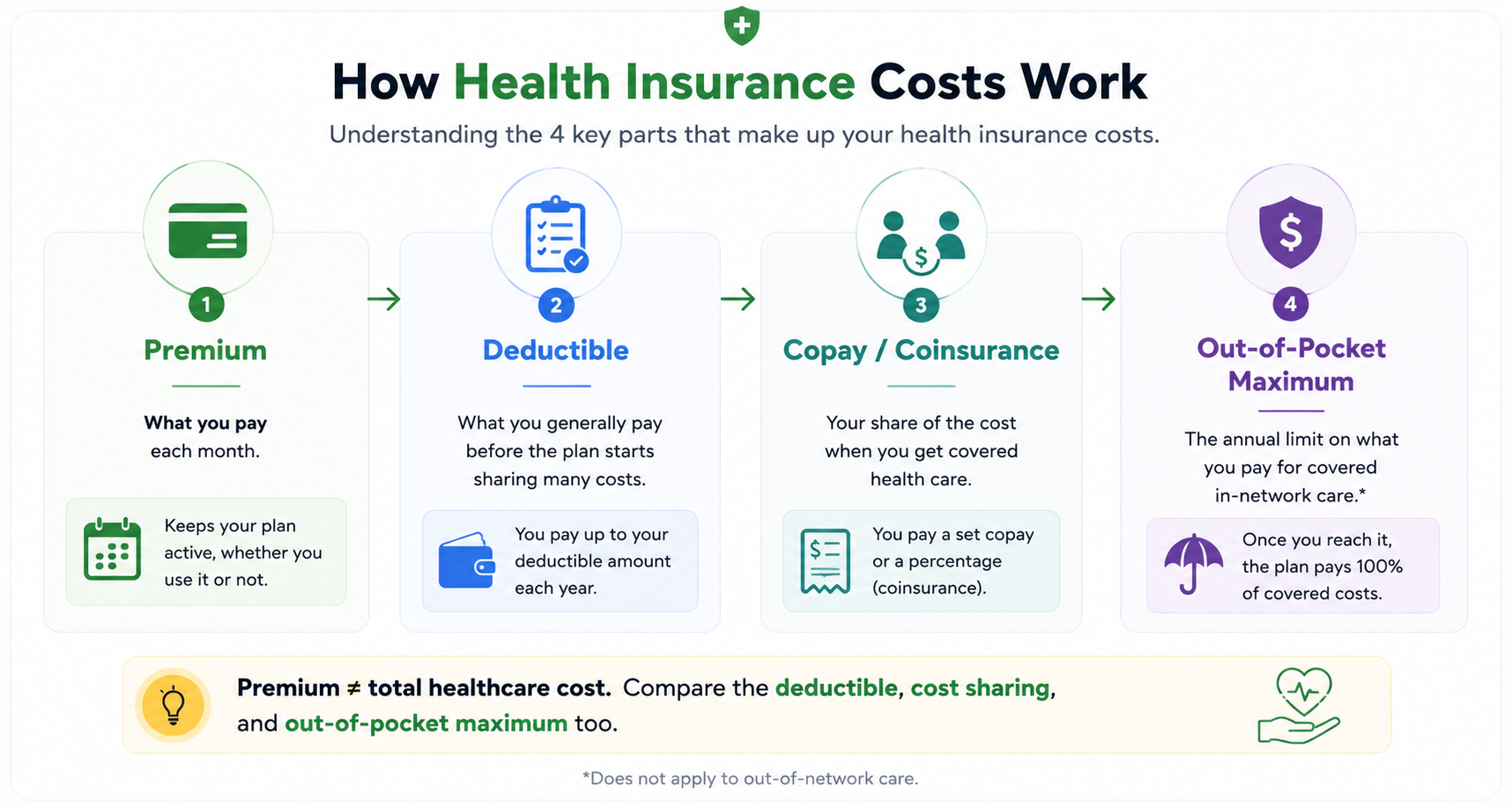
Health insurance is a contract where you pay a monthly premium to your insurer, and in return, they cover a portion of your medical costs, from routine checkups to major hospital stays. Three concepts drive everything about how a health insurance policy actually works: the premium you pay to keep coverage active, the deductible you meet before your insurer starts sharing costs, and the coinsurance or copay split that applies after that deductible is met.

Unlike some insurance types built around a single risk, such as a car accident, health insurance is structured around an ongoing relationship with the healthcare system, which is why the terminology and cost structure tend to feel more layered than a simpler policy type.

How Health Insurance Works

You pay a fixed monthly premium regardless of whether you use any medical care that month. Beyond the premium, most plans include a deductible, an annual amount you pay out of pocket before your insurance starts covering costs, and once that deductible is met, a coinsurance percentage typically applies, where you and your insurer split the remaining cost until you reach your annual out-of-pocket maximum, after which your insurer covers one hundred percent of covered costs for the rest of the plan year.

Many everyday visits, including copays for a routine doctor visit or a prescription, work somewhat differently, often applying as a flat fee rather than being subject to the full deductible and coinsurance structure. For a full breakdown of exactly how premiums, deductibles, copays, and coinsurance interact, see premium, deductible, copay, and coinsurance explained.

Estimate Your Health Insurance Cost

Use our free estimator to see potential health insurance costs based on your age, household, income, and coverage needs.

Daniel Carter
Insurance Content Specialist
Daniel Carter writes beginner focused insurance guides at InsuranceBlip. His work explains policy language, coverage options, and common insurance decisions in plain English, with a focus on helping first time buyers understand auto, health, and life insurance.


What Health Insurance Typically Covers

Hospitalization

Inpatient care, surgery, overnight stays, and intensive care unit treatment.

Emergency Care

Emergency room visits and ambulance services, including out-of-network emergencies.

Prescription Drugs

Covered medications listed on your plan's formulary, organized by cost tier.

Preventive Care

Annual checkups, vaccines, cancer screenings, and blood pressure monitoring, often at no cost.

Mental Health

Therapy, psychiatric services, and substance use treatment, counseling.

Maternity and Newborn Care

Prenatal visits, labor and delivery, and postnatal care for mother and child.

For a full breakdown of what is and is not included, see what's not covered by health insurance.

Common Types of Health Insurance Plans

Health insurance plans also differ in how you access doctors and specialists. An HMO generally requires you to use a defined provider network and may require referrals for specialist care. A PPO usually provides more flexibility to see providers without referrals and may include some out-of-network coverage, but premiums can be higher. EPO plans generally cover care only within their network except for emergencies, while POS plans combine features of HMO and PPO coverage. The best option depends on how much provider flexibility you want and what you're comfortable paying.

Who Needs Health Insurance?

Anyone can benefit from health insurance, but how you actually get it depends heavily on your employment situation and income. Employees at many companies are offered employer-sponsored coverage, typically at a lower cost than buying an individual plan, since the employer shares part of the premium. Self-employed individuals and those without employer coverage generally purchase a plan through the ACA marketplace, where subsidies can significantly reduce the cost depending on income.

Lower-income individuals and families may qualify for Medicaid, a government program providing free or very low-cost coverage, while adults sixty five and older typically become eligible for Medicare, the federal program built specifically around that age group's healthcare needs. Understanding which of these paths applies to your situation is usually the first real decision to make, before comparing specific plans within that path.

How Do You Get Health Insurance?

Most people get health insurance through an employer, the ACA Marketplace, Medicare or Medicaid if eligible, or directly from an insurer. Your available options depend on factors such as employment, household income, age, location, and eligibility for government programs. Enrollment periods and qualifying life events can also determine when you're able to enroll or change plans.

How Much Does Health Insurance Cost?

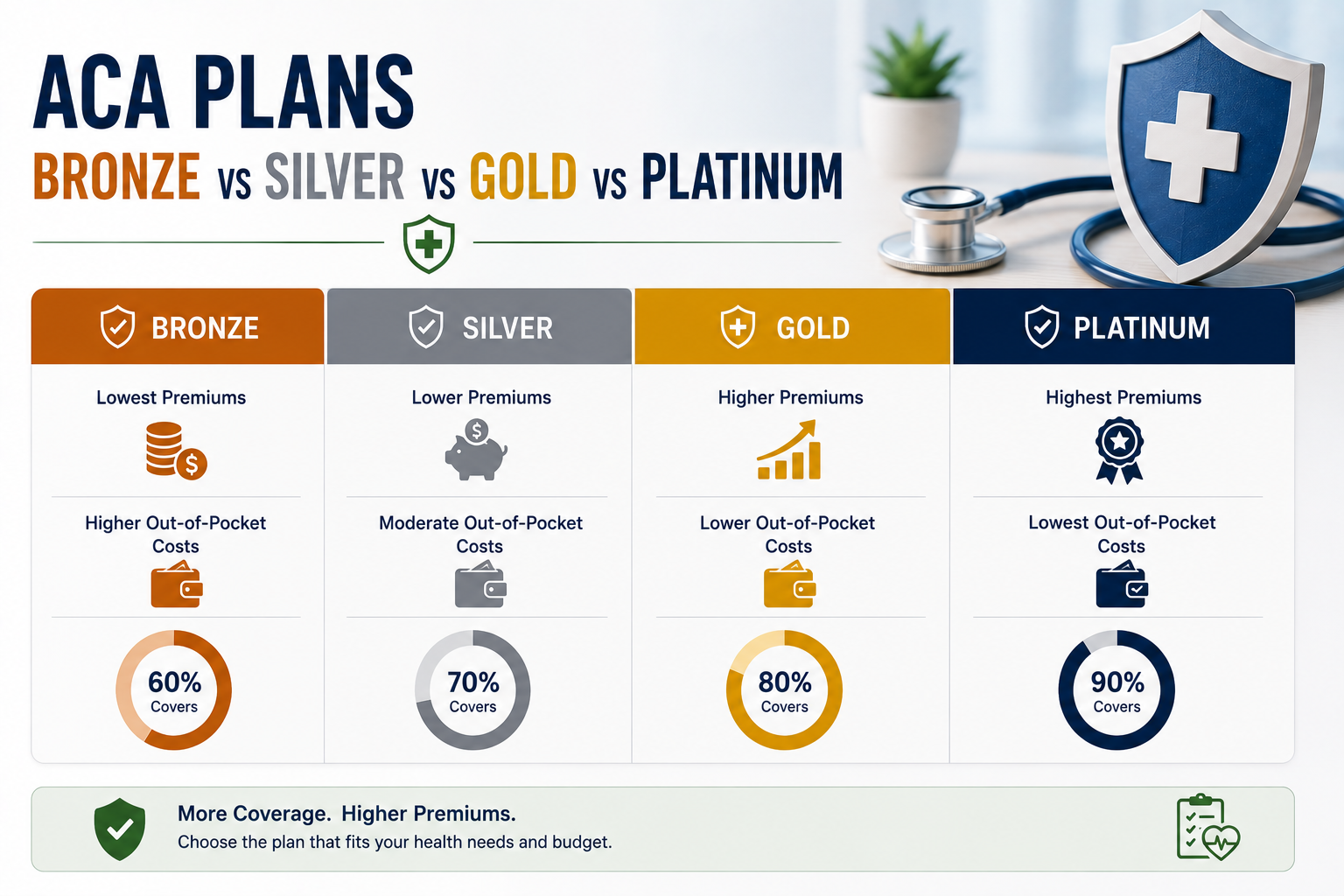
ACA marketplace premiums vary significantly by age, state, and plan tier, before accounting for any subsidy you may qualify for based on income. The figures below reflect national averages for a forty year old individual, before subsidy.

Plan Tier Avg. Monthly Premium
Bronze $310
Silver $443
Gold $540
Platinum $675

For the full breakdown of what drives your specific cost, including how subsidies can substantially lower these figures, see how much does health insurance cost, or get a personalized estimate with our Health Insurance Calculator.

How Health Insurance Costs Work

Browse Insurance Guides

Insurance Basics Guides
Insurance Cost Guides
Insurance Comparison Guides
Insurance Coverage Guides

Insights From Recent Articles

No Medical Exam Life Insurance
No Medical Exam Life Insurance Explained
Is Travel Insurance Worth It
what is home insurance
What Is Home Insurance
Bronze vs Silver vs Gold vs Platinum ACA Plans Compared
What Is Life Insurance
What Is Life Insurance?

Explore By Insurance Types

Auto Insurance
Business Insurance
Health Insurance
Home Insurance
Life Insurance
Travel Insurance

Frequently Asked Questions

Is health insurance required by law?

There is no longer a federal tax penalty for not carrying health insurance, following changes to the federal individual mandate. A small number of states have implemented their own state-level mandate with a penalty for residents who go uninsured, making this worth checking specifically for your state rather than assuming a single national rule applies.

What's the difference between a marketplace plan and employer-sponsored insurance?

Employer-sponsored insurance is offered through your workplace, with the employer typically covering a meaningful share of the premium, often making it the lower-cost option if it is available to you. Marketplace plans are purchased individually through the ACA exchange and may include income-based subsidies that can significantly reduce the premium, particularly valuable for self-employed individuals or those without access to employer coverage.

What happens if I don't have health insurance?

Without coverage, you are personally responsible for the full cost of any medical care you receive, which can be substantial even for a single emergency room visit or short hospital stay. While the federal tax penalty for being uninsured no longer applies nationally, the financial exposure of going without coverage, rather than a legal penalty, is generally the more significant risk to consider.

Understanding the Basics Before You Choose a Plan

Health insurance can feel more complicated than other insurance types because of how many moving pieces, premiums, deductibles, copays, coinsurance, and coverage tiers, interact with each other. Understanding this basic structure first makes every subsequent decision, from choosing a plan tier to comparing specific policies, considerably easier to reason through.

Trusted Insurance Resources

Estimate Your Health Insurance Cost

Get a personalized premium estimate based on your age, income, and plan tier.

Try Health Insurance CalculatorExplore Insurance Guides

At A Galance

Insurance Tools & Estimators

Use our free tools to estimate insurance costs before you shop. No personal information required just straight forward estimates.

Auto Insurance Calculator

Estimate your car insurance costs based on your age range, driving history, vehicle type, coverage level, & location. Understand how each factor affects your premium.

Life Insurance Needs Calculator

Calculate how much life insurance coverage your family might need based on your income, debts, and financial goals.

Health Insurance Estimator

Understand how premiums, deductible, out-of-pocket costs vary across different plans. Useful for comparing coverage options during enrollment or life change.

Business Insurance Estimator

Estimate general liability and small business insurance costs based on your industry, business size, and coverage needs.

Homeowners Insurance Calculator

Estimate how much homeowners insurance might cost based on your property value, location, and coverage needs.

Travel Insurance Calculator

Estimate trip protection costs based on your destination, trip duration, and the type of coverage you need.